 Memorizing Quran

Have you ever learned a page of the Quran well, and then lost it two weeks later? Many people have. Most people can memorize. The hard part is keeping what they learn.
These tips on how to memorize the Quran help with both parts. You will learn how to get each verse into your memory. You will also learn how to keep it there for life.
Many students start hifz with a lot of energy. They learn a page a day for a few weeks. Then old pages start to slip, review piles up, and they feel behind. Some stop around Juz 5 and never return.
Most students don’t stop because they lack talent. They stop because they have no clear plan.
This article gives you one, built on advice from Shaykh Ibn Baz, Shaykh Abdul Rahman Abdul Khaliq, and Dr. Yahya al-Ghawthani: how to get ready, how to memorize each ayah, and how to review and test yourself so you never forget, whether you are a beginner, returning after a break, or a busy adult.
Tip 1 – Start Your Quran Memorization With A Sincere Intention
A sincere intention means you memorize the Quran for Allah alone. You do it to please Him, not for praise or a title. Some days you will feel tired or bored. On those days, your intention keeps you going.
How To Renew Your Intention
Your intention can fade without you noticing, so renew it in every session. Follow these steps:
- Thank Allah when you finish. A short thank-you after each session keeps your heart in the right place.
- Check your reason before you begin. Before you open the Mushaf, take a few seconds to ask yourself why you are here. Your reason can drift toward praise from others or a race with a friend, and a quick check each day brings it back before it grows.
- Make dua for help. Shaykh Ibn Baz told students to ask Allah to make memorizing easy. Ask Him for time, focus, and understanding.
- Choose the best times for dua. Pray at times when dua is more likely to be answered, such as in sujood, in the last third of the night, or between the adhan and the iqamah. Simple words in your own language are enough.
Habits That Protect Your Intention
Stay away from sins. Many scholars say a clean heart holds the Quran better. A man once told al-Hasan al-Basri that he got ready every night but still could not wake up to pray. Al-Hasan replied that his sins had tied him down. When you slip, do not wait. Ask Allah for forgiveness right away, then go back to your lesson.
Also, keep your progress private. Shaykh Abdul Rahman Abdul Khaliq advises against talking much about how much you know or how fast you learn.
He links this to a hadith in Sunan Abu Dawud: “The one who recites aloud is like one who gives charity openly, and the one who recites quietly is like one who gives charity in secret.” Share your progress only with your teacher or someone who supports you, like a parent. Quiet work is easier to keep sincere.
Tip 2 – Learn correct recitation from a teacher first
You should always learn the Quran from a teacher. This way of learning is called talaqqi. You hear the Quran from a skilled reader, and then you read it back to them.
Why You Should Not Memorize Alone
If you learn a mistake alone, you repeat it many times. Soon it sticks, and fixing it later is hard. An old saying among teachers puts it simply: do not take the Quran from the page alone. A teacher hears what you cannot hear in yourself, like small sounds, missed rules, or wrong stops.
Some Arabic letters sound close to each other, and a self-taught learner can mix them up without knowing it. Shaykh Abdul Rahman Abdul Khaliq says the Quran can only be taken by hearing it from a skilled reader, which is why tajweed must be learned. A teacher also keeps you going.
Shaykh Samir Hashish notes that many students come prepared simply because they would feel shy facing their teacher unready. Dr. Murad al-Qudsi also lists a skilled teacher who listens to your recitation as a key to staying on track.
Even after you finish, Shaykh Abdul Khaliq advises that you keep reciting to another hafiz or to someone following along in the Mushaf.

How A Teacher Saves You Time
Dr. al-Ghawthani says that when you fix a page with a teacher first, you already know about 30% of it. Only 70% is left to learn. So correcting first is not extra work. It is a head start.
He describes two ways to do this. The first is to correct the whole Quran from start to end before memorizing anything, which can take a full year. The second is to correct only the page you plan to memorize next.
Most busy learners do better with the second way, because they can start right away. Ask your teacher to read the new page aloud before you begin, so your first try is the right one.
Between classes, Shaykh Ibn Baz advises finding a good companion who reminds you, studies with you, and reviews with you.
Note: The advice from Dr. al-Ghawthani and Shaykh Abdul Khaliq comes from the Al-Hifz al-Muyassar text, which had no web address, so those lines have no link.
Read also: Who Is the Youngest Person to Memorize the Quran?
Tip 3 – Use One Mushaf For Your Whole Hifz
You learn with your eyes, not only your ears. Over time, your mind remembers where each verse sits on the page. A new print breaks this picture, so pick one copy and never switch.
Which Mushaf To Choose
Choose a Mushaf with a consistent page layout, preferably the standard 15-line Madinah Mushaf. Keeping the same copy throughout your memorization journey helps you build visual familiarity with each page and remember the placement of verses more easily.
Shaykh Abdul Rahman Abdul Khaliq adds that a personal Mushaf builds a bond, so you feel drawn to open it each day. With time, you will also know where each quarter and each juz begins and ends.
Make sure it matches the riwayah your teacher uses, such as Hafs or Warsh. If you sometimes read from a tafsir book, Dr. al-Ghawthani suggests one printed with the same Mushaf pages, so the layout in your mind stays the same. Pick a size with clear text you can read without straining your eyes.
Carry A Pocket Copy Of Mushaf
Keep a small copy of the same Mushaf with you wherever you go. Use spare moments throughout the day, even ten minutes during a break or commute, to review previously memorized verses and strengthen your recall.
The same fatwa also suggests a Mushaf split into separate parts that matches your print, so you can carry just the juz you are working on.
Shaykh Abdul Khaliq points to other moments too, like waiting for prayer to start or sitting after it ends. Keep the copy where you will see it, such as in your bag or on your desk.
If you use a phone app, choose one that shows the same page layout as your Mushaf. Use these short moments for review, and save new pages for your main session, when you can focus fully.
Tip 4 – Pick The Right Surah To Start Your Hifz
Where you start can shape your memorization experience. Choose a starting point that feels manageable and motivating, and one that you can commit to consistently. The most important thing is to begin and keep going.
Start With Juz Amma If You Are A Beginner
Juz Amma is the 30th part of the Quran. Its surahs are short, so you finish a whole surah fast. You can also use these surahs in your daily prayers. For a full plan, see how to memorize Juz Amma in 30 days.
It holds 37 surahs, from An-Naba to An-Nas. Many teachers start at the end of the Mushaf, with An-Nas, and work back toward An-Naba. That way, the shortest surahs come first. Islamweb notes that each finished surah gives a beginner a push to start the next one.
Short surahs are also a safe place to practice tajweed before longer passages. Watch for surahs that open in a similar way, like Al-Infitar and Al-Inshiqaq, which both begin with the sky. Children and new Muslims often start here too, because the verses are easy to repeat.
Start With Al-Baqarah If You Want To Memorize In Order
Starting from the front of the Mushaf feels slower at first. But tracking your progress page by page is easy. This choice suits people with strong self-control.
Al-Baqarah is the longest surah in the Quran, with 286 verses. It fills about two and a half juz. Islamweb says this path needs a strong will and patience to keep going. Along the way, you will learn Ayat al-Kursi and the last two verses of the surah. The Prophet ﷺ said that Satan runs away from a house where Surah Al-Baqarah is recited (Sahih Muslim 780).
To stay motivated, set small milestones, such as completing every five pages. Celebrate each achievement with a simple reward to recognize your progress and encourage yourself to keep moving forward.
Start With A Surah You Love If You Keep Quitting
If one surah moves your heart, begin there. Loving what you learn makes it easier to come back each day. Islamweb lists this as a valid third choice: learn a surah you feel drawn to, then move to another.
It could be Surah Yasin, Al-Kahf, Ar-Rahman, or one your parents recited at home. Pick a short or medium surah first, so you finish while your energy is high.
Listen to it many times before you start, and you may find you already know parts of it. The joy of finishing it can break the habit of quitting. After that, choose a fixed path, like Juz Amma or going in order, so your hifz does not stay scattered. Keep a list of the surahs you finish, so you can see what is left.
Tip 5 – Set A Small Daily Amount And Keep It
Your daily amount is the part you learn each day. It might be five verses, half a page, or one page. This number decides if you finish, more than talent does.
Follow The Fixed Daily Amount Rule: Never Less, Never More
Shaykh Abdul Khaliq gives a clear rule. Never go below your daily amount, and never go above it. If you have extra energy, spend it on old pages.
For stronger students, he lists one or two pages, or an eighth of a juz, as other fair amounts. Extra energy can also go into slow reading where you think about the meaning. He warns against racing your classmates or showing off how fast you learn.
Start smaller than you think. Shaykh Samir Hashish says if you can learn a full page, learn half, and learn it very well. In his classes, students who rushed almost never got past Juz 5. Students who took less and kept going finished the whole Quran.
Do not look down on a small amount, even one verse a day. One verse learned well each day beats staying stuck with no progress. He warns that giving up because you feel slow is a trap Satan uses to break your will. If you miss a class, keep your daily amount anyway, then recite it all at the next class.
The Prophet ﷺ said: “The most beloved deeds to Allah are those done regularly, even if they are small.” (Sahih al-Bukhari 6464)
A rest day is fine when you are tired. But breaks of weeks weaken both your memory and your drive.
How Long It Takes To Memorize The Quran At Each Daily Amount
The Madinah Mushaf has 604 pages, and the Quran has 6,236 verses. If you learn every day, the timeline looks like this:
| Daily amount | About how long it takes |
| 2 pages a day | 10 months |
| 1 page a day | 20 months |
| Half a page a day | 3.3 years |
| 5 verses a day | 3.4 years |
The table assumes you never miss a day, so treat it as the fastest path, not a promise. Most juz in this Mushaf are 20 pages long. At one page a day, you finish a juz in about three weeks.
At half a page, it takes about six weeks. Add one test day each week, and a page-a-day plan grows to about 23 months. After Juz 5, many students also slow their new amount to make room for review, which adds more time. Pick the row that fits a busy week, not your best week.
Rest days and catch-up days add a little more. To plan one part at a time, read how long it takes to memorize a juz.
If you want help to set the right daily amount from day one, try the Quran memorization course at Hifz Quran Online Academy. Your teacher listens to you live, fixes your reading, and builds a plan around your time.

Tip 6 – Memorize Each Ayah In Four Steps
Repeating verses is the heart of hifz, but repeating with no plan wastes time. Use the same four steps for every verse: listen, look, lock, and link.
The Listen, Look, Lock, And Link Steps For Each Ayah
- Listen: Play the ayah three times from a good reciter. Follow along in your Mushaf.
- Look: Read it out loud five times while you look at the page. Go slowly and use your tajweed rules.
- Lock: Close the Mushaf and say it from memory. Count only clean tries. If you slip, start the count again at zero. Stop at three clean tries in a row.
- Link: Say the ayah before this one, then this one. Do it three times with no mistakes.
Aim to repeat each passage several times until you can recite it confidently without looking. Start with at least five repetitions, then increase the number as needed until the verses become firmly established in your memory.
He tells a story about a student whose teacher asked him to repeat a lesson 80 times. The student knew it after ten tries, but he kept going because his teacher told him to. An old woman next door heard him and learned the lesson too.
A week later, she could not recall a word of it, while he still knew it well.
Repeating verses is the heart of hifz, but repeating with no plan wastes time. Use the same four steps for every verse: listen, look, lock, and link. This loop gives a clear structure to the rote memorization method for Quran, so every repeat has a purpose.
How To Memorize Long Verses In Small Parts
A long verse is easier to learn when you break it into pieces. Follow these steps:
Give very long verses more time. The longest verse in the Quran, Al-Baqarah 2:282, fills almost a full page. A verse like that may take more than one session, and it is fine to spend a whole day on one long verse.
Split the verse at its stop marks. The small signs above the words in your Mushaf show where you may pause, so they make natural break points.
Keep each phrase whole. Never cut in the middle of a phrase, because that can change the meaning.
Do the four steps on each part. Listen, look, lock, and link each small part on its own.
Join the parts in a chain. Lock the first part, then the second, then say both together before you add a third. This chain keeps each join strong.
Why You Should Recite With A Beautiful Voice
Read with a calm, pleasant voice, not flat like a schoolbook. A nice voice keeps boredom away and helps the words stay. Shaykh Abdul Khaliq adds one more gain: a beautiful voice makes your heart love the Quran and want to read it more.
The Prophet ﷺ said, “Beautify the Quran with your voices.” (Sunan Abu Dawud 1468) Once, he listened to Abu Musa al-Ashari recite and was pleased with his reading.
When Abu Musa found out, he said he would have made it even more beautiful had he known. Dr. al-Ghawthani says many students who forget fast read the Quran like any other book. You do not need a special talent, only a steady pace and clear letters. Do not stretch sounds past the tajweed rules just to sound nice.
Memorize the Quran at Your Own Pace
Join our expert tutors and begin your Hifz journey with a personalized plan.
Start Your Free TrialTip 7 – Join Your Verses And Test The Full Portion Before You Stop
Single verses are not enough. If you never join them, you will freeze between them. After your last verse of the day, follow these steps:
- Say the whole portion from memory three times with no mistakes.
- Write it from memory once, or record yourself and check it.
- Say it again before you sleep.
- Say it once more the next morning.
A portion that is still there in the morning is truly yours. Now it can move into review. If the morning check goes badly, skip new verses that day and relearn the portion first.
When you make a recording, play it again on your way to work or school. Begin each new lesson by saying the last verse of yesterday’s portion, then the first new verse, so the two days join.
Treat surahs the same way. Do not start a new surah until the old one flows from start to end. Shaykh Abdul Khaliq gives a simple test: the surah should run off your tongue with ease, without stopping to think about what comes next.
If you have to pause and search for the next verse, it is not ready yet. Joining verses like this is the idea behind the memory bridge method for Quran memorization.
See Our Classes in Action
Curious about what a 1-on-1 Hifz session looks like? Take a look at these real-time snippets from our daily classes to see our student-centered approach, Tajweed correction techniques, and online whiteboard tools in action.
Tip 8 – Memorize With Your Eyes, Ears, And Voice At The Same Time
Your memory has three doors: your eyes, your ears, and your tongue. Dr. al-Ghawthani compares the heart to a pool with three pipes. When all three flow, the pool fills fast. He also warns that the pool fills with whatever flows in, so fill it with the Quran by keeping music and idle talk out of your study time.

Always Recite Out Loud While You Memorize
People who learn in silence often freeze when they read to a teacher. Saying the words out loud trains your voice as well as your mind.
Your tongue learns the shape of each word, the same way your hand learns a path it walks every day. You do not need to shout.
A clear, steady voice you can hear well is enough. If others are sleeping, a soft voice still works better than silence. Reading out loud also makes it harder for your mind to drift, since you have to stay with each word.
Listen To One Reciter For Your Whole Hifz
Pick one reciter with clear, slow reading and keep him. Play only the part you are working on now, so your ears hear the same sound every time. Each reciter has his own pace, tone, and places to pause, and switching can blur them in your memory.
Good choices for learners include the slow teaching recordings of Shaykh Mahmoud Khalil al-Husary or Shaykh Muhammad Siddiq al-Minshawi.
Shaykh Samir Hashish adds that your review listening should stay on pages you already know. Many apps let you repeat one verse many times, which fits the listen step in Tip 6.
Tip 9 – Write The Verses By Hand To Fix Them In Memory
Writing adds a fourth way to remember, after seeing, hearing, and saying. It also slows you down, so you notice every letter and every mark on the page.
Long ago, students learned from wooden boards. They wrote the verses in front of their teacher, then learned from what they wrote. In some villages, the daily lesson was even called “the board.” Shaykh Hashish calls writing a tested way to make verses stick.
Start by copying the portion slowly while you look at the Mushaf. Then close it and write the portion from memory. Compare the two, circle each word you got wrong, and say those words out loud a few times.
Copy the spelling exactly as it appears in your Mushaf. Some words in the Mushaf are written differently from everyday Arabic. For example, “salah” is sometimes written with a waw. Writing them the Mushaf way keeps the page in your mind the same as the page in your hand.
Yes, there were some repeats. The intro said twice that a story’s order helps memory. “Sum up the passage in your own words” and “explain the passage back to your teacher” were the same idea. The point that a long tafsir isn’t needed came up twice. Apps were also mentioned twice. Here is the cleaned version:
Tip 10 – Learn The Meaning Of Each Passage Before You Memorize It
Read what a passage means before you learn it. When you know the story or the idea, the order of the verses makes sense. A few minutes spent on meaning before a lesson often saves you many minutes of repeating, and feeling what you recite makes you want to come back to it.
How to use meaning in each lesson
Shaykh Abdul Khaliq calls understanding the road to memorization, and he counts it among the biggest helps in hifz. Follow these steps in each lesson:
- Read the tafsir of the whole passage. Read it all, not just one verse, so you see the full idea.
- Sum it up in one sentence. Use your own words. For example: “These verses tell how Musa spoke to Pharaoh.”
- Mark the key words. Look for the words that carry the main idea, like a name, a place, a promise, or a warning. When you get stuck, these words often bring the rest of the verse back.
- Picture the scene. If the passage tells a story, imagine it as you recite.
- Return to the meaning during review. Go back to it after you memorize too, so it stays fresh.
Meaning also changes your prayer. When you recite these verses in salah, you will know what you are saying to Allah.
Which tafsir to read before you memorize
You do not need a long book like Tafsir Ibn Kathir for daily lessons. Save it for deeper study. Tafsir al-Sa’di or Tafsir al-Jalalayn is enough.
Tafsir al-Jalalayn fits in one volume and is among the shortest complete tafsirs. Jalal al-Din al-Mahalli began it, and his student Jalal al-Din al-Suyuti finished it after his teacher died. Tafsir al-Sa’di uses simple Arabic that is easy to follow.
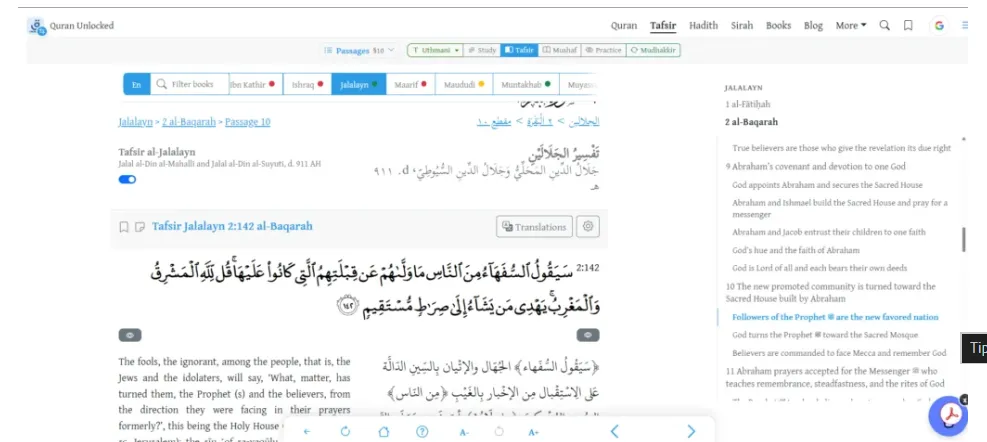
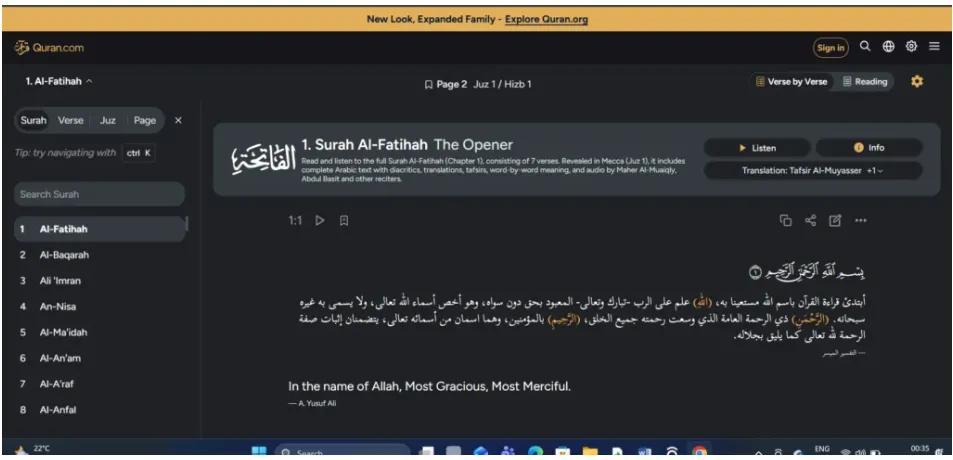
If Arabic is not your first language, read a trusted English translation, such as Saheeh International, next to the tafsir. Quran.com offers free translations and tafsir, so you can start without buying a book.
Memorize the Quran at Your Own Pace
Join our expert tutors and begin your Hifz journey with a personalized plan.
Start Your Free TrialTip 11 – Follow A Fixed Daily Session
A daily plan stops you from guessing, and it makes sure review never gets pushed aside. Choose the 60-minute plan on normal days and the 45-minute plan on busy ones.
The 60-Minute Plan
The warm-up comes first because it shows you right away if yesterday’s portion held overnight. Set a timer for each step, so one step does not eat into the next. You can also split the hour, with new work in the morning and review after Isha, as long as each step gets its full time
| Time | Step | What to do |
| 0 to 5 min | Warm-up | Say yesterday’s portion from memory |
| 5 to 10 min | Get ready | Listen to today’s portion, read the meaning, mark hard words |
| 10 to 25 min | New portion | Use the four steps for each ayah |
| 25 to 30 min | Lock it | Say the full portion three times with no mistakes |
| 30 to 40 min | Recent review | Say the last 7 days of portions |
| 40 to 60 min | Old review | Say today’s share of your old pages |
The 45-Minute Plan For Busy Days
Keep each step, but make it shorter. Use 3 minutes to warm up and 5 to get ready. Then use 12 for the new part and 5 to lock it. Give 8 minutes to recent review and 12 to old review.
Use this plan on workdays, exam weeks, or days when you have guests. Plan your short days at the start of the week, so they do not catch you by surprise. Try not to use it every day if you can manage the full hour, because old review gets eight fewer minutes.
If you run out of time, finish old review in your prayers that day. Never skip the warm-up or recent review, because new pages are the easiest to lose. If your weekly test scores start to drop, count how many short days you had that week. On very hard days, even ten minutes of recent review keeps your habit alive.
Tip 12 – Choose A Fixed Time And A Quiet Place To Memorize
A good time and a quiet place can make the same 30 minutes far more useful.
The Best Time Of Day To Memorize The Quran
The best time to memorize is when your mind is fresh and distractions are minimal, such as early morning before or after Fajr. However, the most important thing is choosing a quiet time that fits your daily routine and sticking to it consistently. Over time, memorization becomes a natural part of your day.
Sleep early enough the night before, because a tired mind holds less. Also avoid studying right after a big meal. Dr. al-Ghawthani explains that your body sends its energy to your stomach, so your brain gets less.
The Best Place To Memorize The Quran
Choose a quiet, distraction-free place to memorize, whether it’s a small room at home or a peaceful corner in a mosque. A calm environment helps you concentrate, retain verses more effectively, and make your memorization sessions more productive.
You do not need a special room. Put your phone in another room and let your family know your study time. Sit up with good light, not in bed, where you may get sleepy. If you can, face the qibla and keep the same spot each day.
Keep your Mushaf, tafsir, and notebooks in that spot, so everything is ready when you sit down. Make wudu before you start, since most scholars say you should be in wudu to touch the Mushaf. A glass of water nearby means you will not need to get up in the middle of your session.
Tip 13 – Review What You Memorize In Three Layers
Review is the most important part of hifz. The Prophet ﷺ said: “Keep on reciting this Quran. By the One in whose hand my soul is, it slips away faster than camels escape their ropes.” (Sahih Muslim 791) Shaykh Samir Hashish calls steady review the main support for every other tip in hifz.
The Three Layers Of Quran Review: Sabaq, Sabqi, And Manzil
Many hifz schools split review into three parts:
- Sabaq: the new part you learn today.
- Sabqi: your recent pages from the last 7 days. Say them every day.
- Manzil: all your older pages. Split them up and review a share each day.
Each portion moves through the layers in order. It starts as sabaq, becomes sabqi once it passes the next-morning check, and joins the manzil after seven days. Say your sabqi from memory first, and open the Mushaf only to check yourself.
Under about 7 juz, go over all your old pages once a week. Past 7 juz, review at least one juz a day, so no page waits more than a month.
Create a simple manzil revision chart showing which pages or portions you will review each day. Follow the schedule consistently, and regularly revisit previously memorized passages instead of focusing only on new material. This helps keep earlier portions fresh and strengthens your overall memorization.
How Much Daily Time To Give Quran Review
Measure your revision time in minutes rather than pages. As your memorization grows, spend more time reviewing previously learned passages than learning new ones. In the beginning, equal time for both is a reasonable starting point, since you have less material to revise.
Strong old pages go fast, while new ones take longer, so counting pages gives a false picture. Time also stays the same from day to day, which makes it easier to plan. Recite your review at your normal pace, because rushing hides small mistakes.
If review keeps taking longer than you planned, some pages are getting weak and need extra care. On days off from work or school, add more review time to get ahead.
How To Review The Quran In Your Prayers
The early Muslims reviewed the Quran in prayer. Follow these steps to do the same:
Note where you stopped. Prayer is a real test, since there is no Mushaf in front of you. After you pray, write down any spot where you paused and fix it later.
Choose the right prayers. Read your old pages in sunnah prayers, the Duha prayer, and above all the night prayer. Shaykh Abdul Khaliq says to use the silent prayers too, and the loud ones if you lead the prayer.
Start with your strongest pages. Begin with pages you know well, then add newer pages as they get stronger.
Test new pages in sunnah prayers first. If you lead others, use only pages you are sure of.
Read longer in the night prayer. You can read a full page or more in each rakah. This way, review time does not have to come out of your busy day.
Tip 14 – Adjust Your Hifz Plan As You Move Through Four Stages
No one learns at one speed from start to end, so your plan has to change as your hifz grows. Move to the next stage when you reach its goal, not just because time has passed.
| Stage | New to review time | Old review load |
| Stage 1: Starting | About 1 to 1 | All your surahs every day |
| Stage 2: Building | About 1 to 2 | All old pages each week |
| Stage 3: Growing | 1 to 3, up to 1 to 4 | At least 1 juz a day |
| Stage 4: Keeping | Review only | At least 1 juz a day |
A. Start With Short Surahs And A Daily Routine
Fix your reading with a teacher and learn short surahs at three to five verses a day. Keep your sessions short, even 20 to 30 minutes, so they are easy to keep up. Practice the review routine now too, even with only a few surahs. Many students finish Juz Amma during this stage.
Use these first weeks to settle on your Mushaf, your reciter, and your study spot, so nothing has to change later. Expect to spend more time listening than memorizing at first, while your ear learns the sounds.
Your teacher may ask you to repeat a surah for several days before you move on, and that is normal. If you miss a day, start again the next day without trying to make up two portions at once. Children often stay in this stage longer than adults, and that is fine.
You are ready for Stage 2 after four weeks of daily sessions in a row, when you can say everything you learned with almost no help.
B. Build Up To About 5 Juz
Grow your daily amount to about half a page. This is when the three review layers start to matter, because your old pages no longer fit in one short session. Many students add Juz 29 and Juz 28 here, since most of their surahs are still short or medium in length.
Half a page is about 7 or 8 lines in the 15-line Mushaf. Split it at a natural stopping point in the meaning, not at an exact line. At this pace, 5 juz takes about 200 days, so plan for this stage to last several months.
Start your notebook for similar verses now, since they begin to show up more often. If you have not started weekly test days yet, begin them here.
Stay at half a page, even when you feel ready for more. Move on at about 5 juz, once your weekly tests are strong most weeks.
C. Grow Past The Juz 5 Wall
Around Juz 5, review starts to take more time than new pages, and progress can feel slow. This is normal, and it does not mean you are failing.
This is the longest stage, from about Juz 5 to Juz 30, so it can take a year or more. Many students raise their amount to one page a day here, but only if their review stays on schedule.
If you started from Juz Amma, the surahs get longer as you move back toward Al-Baqarah. Longer review sessions need short breaks, so stand up and stretch for a minute between blocks. Ask your teacher to point out which juz need extra care before they start to slip.
The fix takes patience. When time is short, cut the new part, never the review. Mark each juz you finish on your chart, so you can still see how far you have come.
D. Keep The Whole Quran After You Finish
Once you finish the Quran, you stop learning new pages. Shaykh Abdul Khaliq sets the minimum at one juz a day, which means a full pass each month. Give each day of the month its own juz, so Day 1 is Juz 1, Day 2 is Juz 2, and so on.
Choose a time for your daily juz that you can keep for years, not just weeks. The juz you finished long ago may feel weaker than recent ones, so give them extra time.
Use Ramadan to read more, since many huffaz complete several passes in that month. Many go on to study for an ijazah, a certificate from a teacher whose chain of reciters goes back to the Prophet ﷺ. Others begin teaching children, which keeps their own hifz strong.
Do more when you can, because your hifz needs care for life. Many families also hold a small gathering to thank Allah when someone completes the Quran.
Tip 15 – Test your Quran memorization every week
Daily review keeps your hifz alive. Weekly tests show if it is truly strong.
How To Run A Weekly Test Day
Pick one day each week with no new verses, and run two tests.
- First, the week test: say all of this week’s new parts at once to your teacher or a study friend. Keep it to one sitting, without breaks, so it feels like a real test.
- Second, the start-anywhere test: your friend opens your old pages at random and reads a few words, and you continue for half a page.
Daily review always starts at the top of a page, so this test finds the weak spots it hides. Ask your friend to pick pages from different juz, not only recent ones.
Friday works well for many students, but any fixed day is fine. If no one is free, record yourself starting from random pages, then check the recording against the Mushaf.
How To Score Each Page After Testing
Count how many times you needed help on each page:
- 0 or 1 times: the page is strong. Keep it in normal review.
- 2 or 3 times: keep it in recent review one more week.
- 4 or more times: learn it again before you add new pages.
A “help” is any time someone gives you a word or you have to look. A long pause while you search for a word counts too, even if you find it alone. Write each score on your chart next to the page number.
After a few weeks, the chart shows which juz are strong and which need more time. A low score is not a failure; it simply shows you where to work. Share your scores with your teacher, who can adjust your plan if needed.
Keep A Mistake Notebook To Find Weak Spots
Write down each mistake with its page, its ayah, and its type. Was it a forgotten word, a mix-up with a similar verse, or a tajweed slip? Many teachers also suggest marking each spot in your Mushaf with a light pencil.
Give each juz its own page in the notebook, so mistakes from the same part stay together. If the same mistake happens again, add a second pencil mark next to the first. Erase a mark only after you recite that spot correctly in three weekly tests. Bring the notebook to class, so your teacher can see what you struggle with.
Look for patterns each week. If most mistakes happen at page turns, practice reciting across the turn until it flows. If most come from similar verses, use Tip 16.
Test Each Surah And Juz In One Sitting
When you finish a surah or a juz, say all of it at once before moving on. Short daily review can miss the places where one part joins the next.
The Al-Hifz al-Muyassar guide suggests an exam after every juz you finish. A full juz takes about half an hour or more at a steady pace, so plan these tests for your weekly test day.
Ask your teacher to listen, since another person hears slips you may not notice. If a juz test goes badly, focus your old review on that juz for the next week, then test it again.
Curious how this works for real students? Read the student reviews at Hifz Quran Online Academy to see what learners say about their teachers, tests, and review plans.

Tip 16 – Keep A Notebook For Similar Verses
Some verses look almost the same, changing by one word, one letter, or the word order. These are called mutashabihat. Shaykh Abdul Khaliq notes that out of more than 6,000 verses, about 2,000 are like others in some way.
They often cause trouble in review more than in new lessons, because your tongue jumps to the version it knows better. Scholars have written whole books on them, such as Al-Burhan fi Mutashabih al-Quran by al-Kirmani.
How To Use The Four-Step Notebook Method
Keep a separate notebook for verses that are similar in wording or meaning. Record each pair as soon as you notice the similarity, even before making a mistake. Keep this notebook separate from your mistake log, and use it regularly to strengthen your ability to distinguish between similar verses.
- Write it down: Copy both verses side by side, with the surah name and ayah number.
- Mark the change: Circle the exact difference in a different color, so your eye goes straight to it.
- Tie it to something: Link the change to the surah’s topic or story, or make up a short phrase that tells you which surah has which version.
- Practice in pairs: Say the two verses one after the other in review until you never mix them up.
Examples Of Similar Verses To Compare
Al-Baqarah 2:58 and Al-A’raf 7:161 tell the same story, a command to the Children of Israel. In one, “enter the gate bowing” comes first. In the other, “say: forgive us” comes first.
Other words change too. Al-Baqarah uses “khatayakum” for “your sins,” while Al-A’raf uses “khati’atikum.” Al-Baqarah also says “and We will give more” with “and” at the start, while Al-A’raf drops the “and.”
Al-Baqarah 2:49 and Ibrahim 14:6 both describe Pharaoh’s people slaughtering sons. The verse in Surah Ibrahim adds the word “and” before “slaughtering.” In Arabic, that is one small letter, and your notebook is how you catch it.
Al-A’raf 7:141 tells the same event with a different word, “killing” instead of “slaughtering.” Put all three verses in one row of your notebook.
Can Adults Memorize The Quran?
Yes. Adults can memorize the whole Quran, and some people have finished after age 60.
Youth does help. Scholars call the years from about age 5 to 23 the golden years, when learning is fast and forgetting is slow. Dr. al-Ghawthani explains that young children remember well but understand less. Around ages 20 to 25, the two are about equal.
So adults should lean on their strength, which is understanding. Memory is like a muscle that grows with practice. Do not give up if you feel slow at first.
Words are not enough?! Look and Judge
Watch how our teachers guide young learners in the Quran Memorization Course for Kids at Hifz Quran Online Academy. In this lesson, a student memorizes Surah An-Nazi’at step by step, using a simple method that makes each verse easier to remember.
Memorize the Quran at Your Own Pace
Join our expert tutors and begin your Hifz journey with a personalized plan.
Start Your Free TrialStart Memorizing The Quran With A Teacher Who Guides Every Step
Knowing these tips is the easy part. Doing them every day is the hard part. Most students stop when no one checks their recitation, runs their tests, or notices when review slips.
Hifz Quran Online Academy gives you that support in every class. Here is what you get:
- A teacher who fixes your reading live. Your teacher listens to every ayah and corrects mistakes before they stick, as Tip 2 explains.
- A plan built around your week. Your teacher sets a daily amount you can keep and adjusts it as you move through each stage.
- Weekly tests with clear feedback. You recite to your teacher, see which pages are strong, and know exactly what to fix.
- A review plan that protects every page. Your new, recent, and old pages each get their own time, so nothing you learn slips away.
- One-on-one classes from home. You learn at times that suit you, with no travel and no waiting for a group.
Try it before you commit. Book your free trial class today and start your hifz with a plan you can keep.

Our Quran Courses
Start wasting your time and take a practical step in memorizing Quran. Check our available Quran memorization courses and click Free Trial.
- Quran Memorization Course
- Quran Memorization and Hifz Course for Kids
- Online Quran Memorization Courses for Adults
- Quran Hifz Course for Ladies
- Quran Memorization Course for Men
- Saudi-Based Quran Memorization Courses
- Hifz Teachers
Conclusion
Memorizing the Quran is a long goal. Nobody reaches it in one leap. It is built from small steps taken day after day, even on days when you don’t feel like it. These tips on how to memorize the Quran turn that big goal into a plan you can follow one day at a time. You don’t need to think about all 604 pages before you begin.
Start by getting the basics right, because everything else rests on them. Keep your intention pure, and come back to it when your motivation dips. Learn from a teacher who can hear the mistakes you can’t hear yourself.
Stay with one Mushaf so every page keeps its place in your memory. And choose a daily amount you can actually keep, not the amount you could manage on your best day. A small amount done every day will always beat a big amount done once in a while.
Then make each session count. Memorize every ayah with care before you move to the next one. Join your verses together before you stop, so they flow as one passage and not as separate pieces. Use your eyes, ears, voice, and hand together. The more ways you take in a verse, the better it stays. Pick a quiet time and protect it. A short plan at the same time each day will do far more than long sessions whenever you remember.
Finally, protect what you’ve learned, because memorizing is only half the work. Review in layers, so new pages and old ones both get their turn. Give review more time as your hifz grows, even if it means memorizing less for a while.
FAQs
Need more tips on memorization the Quran? Read these questions and their answers.
How Many Times Should I Repeat An Ayah To Memorize It?
Repeat each ayah at least eight times. Read it five times while looking. Then say it from memory until you get three clean tries in a row.
What Is The Best Ratio Of New Memorizing To Review?
The best ratio starts near 1 to 1 for beginners. It moves to 1 to 2, and later 1 to 3 or 1 to 4 as your hifz grows. After you finish the Quran, your whole session is review.
How Should I Plan My Daily Quran Memorization Session?
Plan your daily session in six steps: warm up, get ready, learn the new part, lock it, then do recent and old review. A 60-minute session fits all six. On busy days, use the 45-minute version.
How Do I Stop Forgetting What I Memorized From The Quran?
To stop forgetting, review in three layers: today’s part, the last seven days, and a share of your older juz. Test yourself each week and read your review in prayer.
How Do I Stop Mixing Up Similar Verses In The Quran?
To stop mixing up similar verses, write each pair side by side and circle the exact difference. Tie it to the surah’s topic. Then say the two verses back to back until you get them right every time.
How Long Does It Take To Memorize The Whole Quran?
It takes about 20 months to memorize the whole Quran at one page a day. This is based on the 604-page Madinah Mushaf. Test days, rest days, and extra review often make it take longer.
Related Articles
Memorizing Quran







Leave a Reply