 Memorizing Quran

The 7 3 2 1 method of memorization is one of the simplest yet most effective techniques for improving long-term memory. Based on the science of spaced repetition, this method helps students review new lessons before they are forgotten, making memorization more accurate and long-lasting.
For students of the Quran, consistency is far more important than memorizing large amounts at once. The 7 3 2 1 method of memorization provides a structured review schedule that strengthens every new page, making it ideal for anyone pursuing Hifz.
What Is the 7-3-2-1 Hifz Method of Memorization?
The 7 3 2 1 method of memorization is a spaced repetition strategy that schedules reviews at carefully planned intervals.Although it’s commonly written as 7-3-2-1, the reviews actually happen in chronological order:
1 day → 2 days → 3 days → 7 days
Each review occurs just before your brain begins forgetting the information, reinforcing the memory and transferring it into long-term storage.This technique is especially valuable for Quran memorization because retaining previous lessons is just as important as learning new ones.
Read also: The 6446 Quran Memorization Method – A Complete Step-by-Step Guide
How the 7-3-2-1 Hifz Method Works?
The 7-3-2-1 Hifz Method uses spaced repetition to strengthen long-term Quran memorization. Instead of reviewing a newly memorized passage every day, you revisit it at carefully planned intervals that challenge your memory just enough to reinforce it before it fades.
Follow this simple review schedule:
| Study Session | When to Review | Gap Since Previous Review |
| Session 1 | Day 1 | Initial Memorization |
| Session 2 | Day 2 | 1 Day |
| Session 3 | Day 4 | 2 Days |
| Session 4 | Day 7 | 3 Days |
| Session 5 | Day 14 | 7 Days |
Instead of repeatedly reading the same page every day, this schedule spaces your reviews strategically to maximize retention.
Why the 7-3-2-1 Hifz Method Works for Quran Memorization?
Many Hifz students struggle not with memorizing new verses but with retaining older ones.The 7 3 2 1 method of memorization combats the brain’s natural forgetting curve by reviewing each lesson at the optimal time.
Benefits include:
- Stronger long-term memory
- Fewer forgotten verses
- Better fluency during recitation
- Less time spent relearning old lessons
- Greater confidence in revision
Rather than overwhelming yourself with constant repetition, you’re reviewing smarter—not harder.
Applying the 7-3-2-1 Hifz Method to Quran Memorization
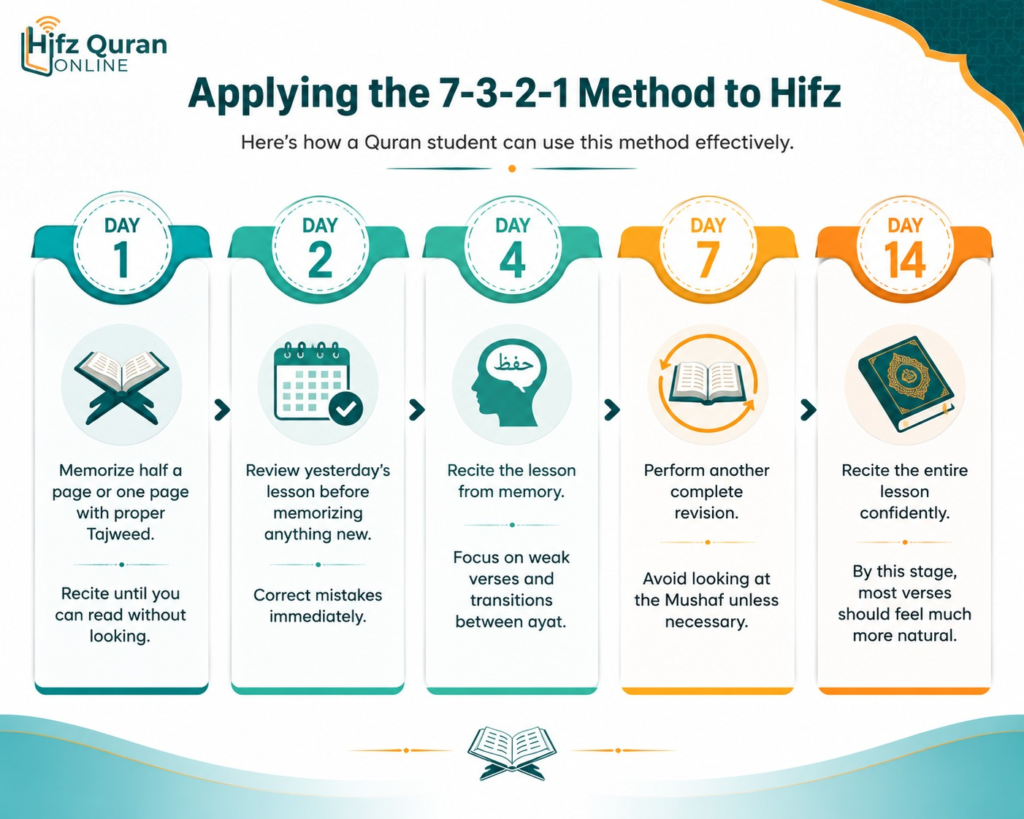
The 7-3-2-1 Hifz Method is a simple review schedule that helps prevent forgetting by revisiting newly memorized verses at carefully spaced intervals. Instead of reviewing randomly, you follow a structured timeline that reinforces the memorization before it begins to fade.
Day 1: Memorize the New Lesson
Memorize your assigned portion, whether it is half a page or one full page, while applying the Tajweed rules you have learned. Continue reciting until you can read the entire passage confidently from memory without looking at the Mushaf.
Day 2: First Review
Before memorizing any new verses, review the portion you learned the previous day. Recite it entirely from memory and correct any mistakes as soon as they appear. Strengthening the memorization at this stage makes it much more stable in the days ahead.
Day 4: Second Review
Return to the same lesson after a two-day gap and recite it from memory. Pay special attention to verses that caused hesitation during earlier reviews, as well as the transitions between ayat. This review strengthens recall while identifying any weak areas that need additional practice.
Day 7: Third Review
One week after the initial memorization, complete another full revision of the passage. Challenge yourself to recite without looking at the Mushaf, using it only if you become genuinely stuck. By this point, the verses should begin to feel more natural and require less mental effort to recall.
Day 14: Final Consolidation Review
Two weeks after memorization, recite the entire lesson from memory with confidence. Most verses should now be firmly established in long-term memory.
If you still struggle with particular ayat, give those sections extra attention before continuing with new memorization. This final review completes the 7-3-2-1 cycle and provides a strong foundation for future Muraja’ah (revision).
Read Also: How to Memorize the Quran in 4 Months?
Tips for Successful Quran Memorization Using the 7-3-2-1 Hifz Method
The 7-3-2-1 Hifz Method works best when it is paired with good memorization habits. Small improvements in your daily routine can significantly increase your retention, accuracy, and consistency over time.
1. Memorize After Fajr
The time after Fajr is often the best period for memorization because the mind is rested and distractions are minimal. Many Hifz students find that verses learned early in the morning are easier to retain throughout the day.
2. Use the Same Mushaf
Stick to one Mushaf throughout your memorization journey. Seeing the same page layout repeatedly helps build visual memory, making it easier to remember where each ayah appears and recall it during revision.
3. Apply Tajweed from the Beginning
Always memorize verses with the Tajweed rules you have already learned. Correct pronunciation should become part of the memorization process rather than something to fix later, as correcting memorized mistakes is much more difficult.
4. Review Previous Lessons Every Day
Don’t let new memorization replace daily Muraja’ah (revision). Set aside time each day to review older lessons alongside your new portion. Consistent revision keeps previously memorized verses strong while allowing you to continue making steady progress.
5. Make Dua for Success
Hifz is both an intellectual and spiritual journey. Ask Allah ﷻ to grant you sincerity, consistency, and a strong memory. Regular dua, combined with steady effort, helps you remain motivated through the challenges of memorization.
6. Learn with a Qualified Quran Teacher
A knowledgeable teacher can identify mistakes that you may not notice on your own, correct your Tajweed, monitor your progress, and adjust your revision schedule when needed. Guided memorization is generally faster, more accurate, and more sustainable than studying alone.
7. Focus on Consistency, Not Speed
The greatest predictor of successful Hifz is not how much you memorize in a single day, but how consistently you practice over weeks and months. Even a small daily portion, reviewed according to the 7-3-2-1 schedule, can lead to lasting memorization and steady progress toward completing the Quran.
Read also: What Is the 3×3 Method for Memorizing the Quran? A Complete Guide
8. Combine Active Recall with the 7-3-2-1 Hifz Method
Simply rereading isn’t enough.
Instead, use active recall:
- Recite without looking.
- Test yourself.
- Ask a teacher or parent to listen.
- Record your recitation.
- Identify mistakes before checking the Mushaf.
Active recall dramatically strengthens memorization compared to passive reading.
Step Inside Our Virtual Classrooms
Don’t just take our word for it—see how our interactive sessions work! Watch the short clips below to experience our engaging teaching methods, live teacher-student interactions, and the supportive learning environment we bring to every student.
Memorize the Quran at Your Own Pace
Join our expert tutors and begin your Hifz journey with a personalized plan.
Start Your Free TrialBenefits of the 7-3-2-1 Hifz Method
The 7-3-2-1 Hifz Method provides a simple, structured approach to Quran memorization that emphasizes consistent review rather than repeated cramming. By revisiting each lesson at carefully spaced intervals, students strengthen their recall, improve retention, and develop a sustainable Hifz routine.
1. Improves Quran Retention
The scheduled review sessions reinforce newly memorized verses before they are forgotten. Each revision strengthens the memory, making it easier to retain ayat for months and even years.
2. Builds Stronger Long-Term Memory
Instead of relying on constant repetition in a single session, the method uses spaced review to transfer memorization from short-term to long-term memory. This helps students remember their lessons more reliably during future Muraja’ah.
3. Reduces the Time Needed for Revision
Because each portion is reviewed at the right time, students spend less time relearning forgotten verses. Their daily revision becomes more efficient, allowing them to balance new memorization with reviewing older lessons.
4. Increases Confidence During Recitation
Regular review helps eliminate hesitation and uncertainty. As verses become more familiar through repeated recall, students gain confidence when reciting from memory in front of their teacher or during prayer.
5. Prevents Older Lessons From Being Forgotten
One of the biggest challenges in Hifz is maintaining previously memorized portions while continuing to learn new ones. The 7-3-2-1 schedule ensures that older lessons remain part of the revision cycle, reducing the risk of forgetting them over time.
6. Encourages Consistent Progress
The method breaks memorization into manageable stages, making it easier to build a daily habit. Seeing steady improvement through structured review helps students stay motivated throughout their Hifz journey.
Whether you’re memorizing Juz Amma, completing your first Juz, or working toward memorizing the entire Quran, the 7-3-2-1 Hifz Method provides an organized review system that supports accurate memorization and long-term retention.

Read Also: Quran Memorization Course
Common Mistakes to Avoid When Using the 7-3-2-1 Hifz Method
The 7-3-2-1 Hifz Method is most effective when followed consistently. However, a few common mistakes can reduce its benefits and make memorization more difficult to maintain.
Avoiding these habits will help you retain your memorization more effectively and make your revision sessions more productive.
1. Skipping Scheduled Reviews
The review schedule is the foundation of the 7-3-2-1 method. Missing your Day 2, Day 4, Day 7, or Day 14 revisions allows the memory to weaken, making future review sessions longer and more challenging. Even a brief review is better than skipping it entirely.
2. Memorizing Too Much at Once
Trying to memorize large portions in a single session often leads to mental fatigue and weaker retention. It is more effective to memorize a small, manageable amount each day and review it consistently than to rush through several pages and forget much of them later.
3. Reading Instead of Reciting from Memory
Simply reading the Quran repeatedly is not enough to test whether the verses have been memorized. The greatest improvement comes from closing the Mushaf and reciting from memory.
This active recall strengthens long-term retention and quickly reveals any areas that need additional practice.
4. Ignoring Difficult Verses
Many students spend most of their review time reciting the verses they already know well while avoiding the ones they find difficult. Instead, identify the ayat that consistently cause hesitation and devote extra time to reviewing them.
Strengthening your weakest sections creates more balanced and reliable memorization.
5. Neglecting Older Memorization
As new lessons are added, it’s easy to focus only on recent memorization and overlook older portions. Without ongoing Muraja’ah (revision), even well-memorized pages can gradually weaken.
Maintain a regular review routine for previously memorized surahs alongside your new lessons to keep your Hifz strong over the long term.
Why Do Online Hifz Students Love The 7-3-2-1 Hifz Method?
Students learning online often have busy school or work schedules.
The 7 3 2 1 method of memorization fits perfectly because:
- Review sessions only take 15–30 minutes.
- Progress is easy to track.
- Lessons remain manageable.
- Teachers can monitor retention during live classes.
- Students build a lifelong revision habit.
For online Quran learners, this structured approach makes memorization both efficient and sustainable.
Read also: The 3:10 Hifz Technique – What It Is and How It Works
See Our Classes in Action
Curious about what a 1-on-1 Hifz session looks like? Take a look at these real-time snippets from our daily classes to see our student-centered approach, Tajweed correction techniques, and online whiteboard tools in action.
Start Your Hifz Journey with Confidence
At Hifz Quran Online Academy, our experienced teachers help students memorize the Quran using proven learning strategies, personalized revision plans, and consistent guidance.
Whether you’re just beginning or returning after a break, combining expert instruction with the 7 3 2 1 method of memorization can make your Hifz journey more organized, Choose the program that fits your needs:
- Quran Memorization Course (comprehensive Hifz for all ages)
- Quran Memorization and Hifz for Kids
- Online Quran Memorization Courses for Adults
- Quran Hifz for Ladies.
Book your free trial lesson today
Memorize the Quran at Your Own Pace
Join our expert tutors and begin your Hifz journey with a personalized plan.
Start Your Free Trial
Conclusion
The 7 3 2 1 method of memorization is a practical spaced repetition technique that helps strengthen long-term memory through timely review sessions. When combined with active recall and consistent daily revision, it can make Quran memorization more effective, organized, and sustainable.
By following this simple approach, Hifz students can improve retention, reduce forgetting, and build lasting confidence in their memorization.
Frequently Asked Questions
Is the 7-3-2-1 Hifz Method of memorization only for Quran?
No. It works for languages, school subjects, vocabulary, exams, and any skill requiring long-term memory. However, it is especially effective for Hifz because Quran memorization depends heavily on regular revision.
Can beginners use the 7-3-2-1 Hifz Method?
Absolutely. Beginners often benefit the most because the method establishes strong memorization habits from the very beginning.
How long should each review session last?
Most review sessions take between 15 and 30 minutes, depending on the amount of material being revised.
What happens if I miss a review?
Simply continue with the schedule as soon as possible. Long-term consistency is more important than perfect timing.
Should I only use this method for new lessons?
No. The 7 3 2 1 method of memorization should complement your daily revision of older portions. Combining new lesson reviews with regular revision of previous memorization produces the best Hifz results.
Related Articles
Memorizing Quran







Leave a Reply