 Memorizing Quran

| Key Takeaways |
| Juz Amma contains 37 Surahs across 22 pages, and it the most accessible starting point for Hifz. |
| Memorizing 3–5 lines daily with same-day revision allows most non-Arabic speakers to complete Juz Amma in 2–4 months. |
| The Rabṭ technique — connecting the end of each verse to the beginning of the next — prevents sequence confusion in short, rhythmically similar Surahs. |
| Muraja’ah must begin within 24 hours of new memorization to interrupt the forgetting curve before retention collapses. |
| Starting from Surah An-Nas and working backward to Surah An-Naba’ follows the natural difficulty curve of Juz Amma. |
Learning how to memorize Juz Amma is the first real milestone in every Hifz student’s path — and for good reason. Juz 30 is the shortest Juz in the Quran, built from short, rhythmically powerful Surahs that non-Arabic speakers can engage with immediately. But “short” does not mean “simple,” and without a structured approach, students stall within the first few weeks.
The most effective Juz Amma memorization plan combines a reverse-order learning sequence, a disciplined daily target, and a Muraja’ah system that runs alongside new memorization from day one.
Students who follow this structure at Hifz Quran Online Academy consistently complete Juz 30 within two to four months — even with no prior Arabic background.
1. Understand What You Are Memorizing Before You Begin
To memorize Juz Amma effectively, you need a clear picture of its structure first. Juz 30 contains 37 Surahs — from Surah An-Naba’ (78) to Surah An-Nas (114) — spanning roughly 20 pages of the standard Madani Mushaf.
Understanding this scope prevents the most common beginner mistake: treating every Surah as equally demanding. They are not. Surah An-Naba’ alone is longer than the final fifteen Surahs combined. Knowing this allows you to distribute your daily effort intelligently rather than being blindsided by pacing problems mid-way through.
Before beginning, map out every Surah, its page count, and its approximate verse count. This structural awareness is what separates students who complete Juz Amma from those who plateau.
How Many Pages Is Juz Amma?
Juz Amma spans 22 pages in the standard 604-page Madani Mushaf. The Juz opens with Surah An-Naba’ on page 582 and closes with Surah An-Nas on page 604.
This means a student memorizing one page per day would complete the full Juz in 20 days — but that pace is only sustainable for students with prior Hifz experience.
For beginners, a realistic and retention-focused target is half a page per day, which yields a 40-day memorization window before Muraja’ah consolidation.
Shots Videos from Our Courses
Memorize the Quran at Your Own Pace
Join our expert tutors and begin your Hifz journey with a personalized plan.
Start Your Free TrialCan Children Memorize Juz Amma Faster Than Adults?
Children between the ages of five and twelve generally demonstrate faster initial memorization speeds due to greater neurological plasticity. However, adults have stronger comprehension capacity, which aids long-term retention when used effectively.
Both groups benefit significantly from structured guidance — the Quran Memorization and Hifz for Kids program at Hifz Quran Online Academy is specifically designed for children’s memorization patterns and attention spans.
Start your child’s Hifz today with a free lesson

2. Start from Surah An-Nas and Work Backward to Surah An-Naba’
The single most effective structural decision in any Juz Amma memorization plan is beginning from the end — Surah An-Nas — and progressing backward toward Surah An-Naba’. The final Surahs of Juz 30 are the shortest, most familiar, and most frequently heard in Salah, which means students build confidence and momentum before encountering the longer, more demanding Surahs.
This reverse-order approach is not merely strategic — it is pedagogically grounded. Students who begin with Surah An-Nas, Al-Falaq, Al-Ikhlas, and Al-Masad arrive at the longer Surahs already possessing a solid revision base.
By the time they reach Surah Al-Ghashiyah or An-Naba’, their Muraja’ah system is functioning.
Many students at Hifz Quran Online Academy who previously struggled with linear sequencing reported measurably faster completion rates after switching to this reverse method.
Students enrolled in the Quran Memorization Course at Hifz Quran Online Academy receive recitation modeling directly from their certified Huffaz instructor each session — live audio modeling that audio recordings alone cannot fully replicate.
Book a free trial to start your Hifz path today

If you want to explore the easiest Surahs to begin with, that resource provides a ranked breakdown that pairs naturally with this reverse approach.
3. Set a Daily Memorization Target You Can Sustain for Months
To memorize Juz Amma without burnout or retention collapse, your daily target must be calibrated to your actual capacity — not your ambition. For most non-Arabic speaking adults, 3 to 5 lines of new memorization per day is the optimal sustainable target.
This is not a conservative estimate — it is the range that consistently produces long-term retention.
Students who push beyond 5 lines daily in the early weeks almost always face a retention crisis by week four, when accumulated new memorization begins outpacing their revision capacity. The table below maps daily targets to realistic completion timelines for Juz Amma:
| Daily New Memorization | Estimated Completion (Juz Amma) | Recommended For |
| 3 lines | 5–6 months | Complete beginners, working adults |
| 5 lines (half page) | 3–4 months | Students with prior Quranic reading fluency |
| 1 full page | 6–8 weeks | Students with active Hifz experience |
The Quran memorization schedule guide provides structured daily planning templates that integrate both new memorization and Muraja’ah sessions into a realistic weekly routine.
If you are an adult learner who wants structured accountability alongside this plan, the Online Quran Memorization Courses for Adults at Hifz Quran Online Academy pair each student with a certified Hafiz who sets and monitors daily targets based on individual capacity — removing the guesswork entirely.
Enroll in our Quran Memorization Course for Adults with a free trial

4. Apply the Rabṭ Technique to Lock Verse Sequences in Memory
One of the most persistent problems in Juz Amma memorization is verse-sequence confusion — particularly in Surahs with short, rhythmically similar ayat. The Rabṭ technique directly solves this. Rabṭ means “connection” — the practice of always reciting the last word of one verse together with the first word of the next, drilling the transition point until it becomes automatic.
Before introducing Rabṭ formally to students, sequence errors within similar-sounding Surahs were among the most frequent mistakes observed in recitation assessments.
After making Rabṭ a non-negotiable part of the daily memorization process, those errors dropped significantly within two weeks. Here is how to apply it practically:
How to Apply Rabṭ in Your Daily Memorization Session?
Memorize verse one until fluent. Then memorize verse two. Then recite the last three words of verse one followed immediately by the first three words of verse two — repeat this transition ten times before moving forward.
This transition drilling is what embeds the sequence neurologically. Without it, students rely on conscious recall rather than automatic retrieval, which collapses under the pressure of leading Salah.
Read Also: How to Memorize a Juz?
5. Build Your Muraja’ah System from Day One
Muraja’ah — systematic revision of previously memorized material — must begin on the very first day of Juz Amma memorization, not after you finish the Juz. This is the rule that most self-taught students violate, and it is the primary reason so many people “finish” Juz Amma but cannot recite it six months later.
The neuroscience here is straightforward: without active retrieval within 24 hours of memorization, forgetting accelerates rapidly.
In Hifz methodology, the Muraja’ah system is designed to interrupt this curve repeatedly until long-term retention is established. For Juz Amma, apply this daily ratio:
| Session Component | Daily Target |
| New memorization | 3–5 lines |
| Same-day review (new material) | 3 repetitions minimum |
| Previous day’s material | Full recitation once |
| Accumulated revision (older material) | Rotate through completed Surahs |
The complete guide to revising memorized Quran covers the full Muraja’ah framework in depth, including how to structure long-term revision cycles once Juz Amma is complete.
Memorize the Quran at Your Own Pace
Join our expert tutors and begin your Hifz journey with a personalized plan.
Start Your Free Trial6. Master Tajweed Rules Specific to Juz Amma Before You Memorize
Memorizing with Tajweed errors is not memorization — it is encoding the wrong recitation into long-term memory, which is far harder to correct than learning correctly from the start.
Juz 30 contains several Tajweed rules that appear with high frequency and must be understood before drilling begins.
The most commonly misapplied rules in Juz Amma include:
- Ghunnah (nasalization): Applied to noon saakinah and tanween in specific conditions — Ikhfa’, Idgham, and Iqlab all require distinct articulation that varies by the following letter’s Makhraj.
- Qalqalah (echo sound): Present extensively in short Surahs of Juz 30. The five Qalqalah letters (ق ط ب ج د) require a distinct bouncing articulation, especially in waqf (stopping) positions.
- Madd (elongation): Natural Madd versus connected Madd rules appear throughout these Surahs and affect both rhythm and meaning if applied incorrectly.
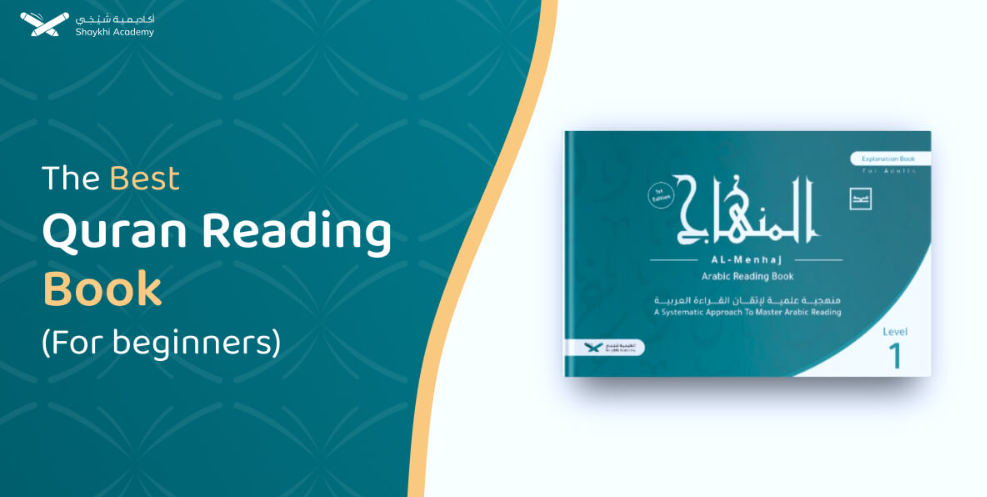
Getting these rules right from the start is not optional. If your Tajweed foundation needs strengthening before beginning Hifz, the Al-Menhaj Book — authored by Luqman ElKasabany and developed by instructors with 25+ years of teaching experience — provides the structured reading and Tajweed foundation that Juz Amma memorization requires.
Explore and Study Al-Menhaj Book for FREE
7. Use Audio Repetition from a Single Reciter Throughout
Consistent audio repetition from one reciter is among the most underestimated tools in Juz Amma memorization. The auditory imprint of a single voice’s rhythm, pacing, and Makhraj creates a reliable mental template that the memory retrieves during recitation.
Switching between reciters, especially in the early stages, disrupts this template and introduces inconsistency.
Choose one reciter whose Tajweed is impeccable and whose pace is clear — not too fast for your current level. Repeat each new segment with the audio a minimum of ten times before attempting silent repetition.
The best reciter to memorize Quran guide provides evidence-based recommendations matched to different student learning profiles.
Sheikh Mahmoud Khalil Al-Husary’s Muallim (teaching) recitation is particularly effective for this pre-memorization listening step.

8. Schedule Your Memorization Session at the Optimal Time of Day
Timing your memorization session correctly is not a minor detail — it directly affects how deeply material is encoded. Students who memorize after Fajr Salah consistently demonstrate stronger retention in recitation assessments than those who memorize in the evening.
The post-Fajr window offers two neurological advantages: the mind is rested after sleep consolidation, and external distractions are at their daily minimum. This creates optimal conditions for the focused, repetitive attention that Hifz requires.
The best times to memorize Quran resource provides a detailed breakdown of how different daily windows affect retention based on instructional observation.
If post-Fajr is not feasible due to work or family commitments, the pre-sleep window is the second-best alternative — new material reviewed immediately before sleep benefits from overnight memory consolidation.
9. Track Progress Weekly and Adjust the Juz Amma Memorization Plan When Retention Stalls
A Juz Amma memorization plan that never adapts is a plan that eventually fails. Weekly self-assessment is what allows students to catch retention problems before they compound into a full breakdown of previously memorized material.
Every Sunday — or whichever day you designate — recite all completed Surahs from memory without looking at the Mushaf.
Any Surah where you hesitate, lose sequence, or cannot complete without prompting is flagged for intensive Muraja’ah that week before any new memorization resumes.
This is non-negotiable. Pushing forward with new material while older material is weak is the fastest path to losing everything you have memorized.
The how to start memorizing Quran guide covers the foundational tracking habits that prevent this compounding problem from taking root.
Our Students Reviews
Memorize the Quran at Your Own Pace
Join our expert tutors and begin your Hifz journey with a personalized plan.
Start Your Free TrialRead Also: How to Memorize Surah Rahman?
Begin Your Juz Amma Memorization with Expert Guidance at Hifz Quran Online Academy
Knowing the method is half the battle — consistent, accountable practice with expert correction is what completes it.
Hifz Quran Online Academy offers:
- Certified Huffaz with verified credentials and teaching experience with non-Arabic speakers
- Personalized 1-on-1 sessions tailored to your exact pace and schedule
- Flexible timing across all global time zones
- Dedicated programs: Quran Memorization and Hifz for Kids, Online Quran Memorization Courses for Adults, and Quran Hifz for Ladies
- A completely free trial lesson — no commitment required
Book your free trial today and begin Juz Amma with a certified instructor guiding every step.
Memorize the Quran at Your Own Pace
Join our expert tutors and begin your Hifz journey with a personalized plan.
Start Your Free TrialBook your free trial lesson today

Conclusion
Memorizing Juz Amma is genuinely within reach for any committed student — regardless of Arabic background, age, or prior Hifz experience. What separates those who complete it from those who stall is not talent; it is structure.
A reverse learning sequence, a sustainable daily target, Rabṭ technique for verse connections, and a Muraja’ah system that runs from day one — these are the four pillars that hold the entire plan together.
Start where you are. Memorize what you can today. Review what you learned yesterday. Insha’Allah, the pages accumulate faster than you expect when the method is sound.
Frequently Asked Questions About How to Memorize Juz Amma
How Long Does It Take to Memorize Juz Amma for a Beginner?
Most adult beginners with no Arabic background complete Juz Amma in 2 to 4 months when memorizing three to five lines daily with consistent Muraja’ah. Students with stronger Quran reading fluency may complete it in six to eight weeks at a full page per day. Retention quality — not speed — is the only meaningful measure of completion.
Should I Memorize Juz Amma in Order from Surah An-Naba’ to An-Nas?
No — beginning from Surah An-Nas and working backward toward Surah An-Naba’ is the more effective approach. The final Surahs are shorter, more familiar from daily Salah, and build confidence before the longer, more demanding Surahs. This reverse sequence prevents early burnout and creates a stable revision base before difficulty increases.
How Many Repetitions Does Each Verse Need Before Moving On?
A new verse typically requires a minimum of twenty to thirty focused repetitions before it is ready for the next day’s review. However, the real test is not count-based — it is performance-based. A verse is ready to move past when you can recite it correctly from memory, without hesitation, three consecutive times after a ten-minute pause.
What Should I Do After Completing Juz Amma?
After completing Juz Amma, enter a minimum four-week consolidation phase before beginning any new Juz. During this phase, recite the entire Juz from memory daily and address any weak Surahs with focused Muraja’ah. Only when you can recite Juz 30 completely and fluently without prompting should you advance. The full Quran memorization guide outlines the complete progression path from Juz Amma through to Khatm al-Quran.
Related Articles
Memorizing Quran






Leave a Reply