 Memorizing Quran
Ever wondered if you could memorize the Quran by yourself? The thought can be both daunting and rewarding, and this guide is here to equip you with the knowledge to embark on this journey.
This article will explore everything you need to know about memorizing the Quran by yourself, from step-by-step instructions to helpful tips and resources. We will answer questions like “How much time does it take to memorize the Quran by yourself?”, “What are the best Surahs to start with?”, and “Is a teacher absolutely necessary, or can I truly do this independently? We’ll even provide a step-by-step approach to memorizing a page of Quran a day! Let’s get started!
In a nutshell, Memorizing the Quran by yourself is a journey that requires dedication, patience, and structured planning. It involves breaking down each verse into words, repeating them until ingrained, and seeking guidance when needed. Integrating memorized verses and regular revision lead to mastery, culminating in the memorization of entire Surahs.
Can I Memorize the Quran By Myself?
Memorizing the Quran by yourself means taking the initiative and putting in the dedicated effort to learn and retain the holy text on your own. You’ll be managing your study schedule, setting goals, and utilizing resources to solidify memorization.
However, it’s important to understand that this doesn’t equate to complete isolation. While you’ll be self-directed, relying solely on yourself isn’t recommended. Here’s why a Sheikh is still crucial.
At Hifz Quran Online Academy, we regularly work with students who previously attempted solo memorization for 6–12 months before enrolling. The most consistent pattern we observe: strong memorization of Juz Amma, reasonable retention through Juz 29, then a sharp drop in both accuracy and retention from Juz 28 onward — precisely where Tajweed complexity increases and self-monitoring without external feedback becomes insufficient.
This does not mean solo effort is wasted. Students who invest serious time in independent practice before joining a structured Quran Memorization Course consistently progress faster than complete beginners — their ear is trained, their attachment to the words is strong, and their foundational recitation is familiar. Self-study builds readiness; structured instruction builds permanence.
Book a free trial to start your Hifz path today

Can I memorize the Quran by Myself Without Forgetting?
Yes, you can indeed memorize the Quran by yourself without forgetting, but it’s essential to approach the process with dedication, patience, and a structured plan. In this guide, we’ll outline a step-by-step approach to help you in this pursuit.
However, having a Sheikh or tutor to assist you can greatly enhance your memorization experience and ensure accuracy in your recitation.
In the following step-by-step section, we’ll provide detailed guidance on how to approach Quranic memorization independently while emphasizing the benefits of seeking guidance from a qualified Sheikh or tutor.
Remember, while self-memorization is possible, seeking assistance from knowledgeable individuals can greatly enrich your learning journey and contribute to a deeper understanding and appreciation of the Quranic text.
Book a FREE session with one of our Ijazah-certified teachers

How to Memorize the Quran by Yourself?
Memorizing the Quran by yourself involves breaking down each verse into words, repeating them until they’re ingrained, and seeking guidance when needed. Combining words into phrases and reciting entire verses with sincerity are essential steps.
Integration of memorized verses and regular revision lead to mastery, culminating in the memorization of entire Surahs. Let’s explain in detail the step-by-step approach to memorize the Quran by yourself.
Step 1: Divide Each Verse
Breaking down each verse into its constituent words is the foundational step in Quranic memorization. This process not only facilitates understanding but also aids in retention and mastery of the text.
1. Divide Each Verse into Words
Take the time to carefully dissect each verse, identifying individual words and their meanings. This meticulous approach lays the groundwork for a structured and systematic memorization process.
2. Read Each Word Letter by Letter
Before listening to the pronunciation from a qualified Sheikh, challenge yourself to read each word letter by letter. Pay attention to the intricacies of Arabic script, allowing your eyes to trace the graceful curves and loops of each letter.
3. Say Each Word by Heart
Repetition is the key to memorization. Repeat each word aloud, allowing the rhythmic cadence of the Quran to resonate within your heart. Visualize the word as you recite it, forging a deep connection between sound and meaning.
4. Write Down Each Word
Transcribing each word reinforces recognition and recall. Use a dedicated notebook to write down each word, paying careful attention to Arabic alphabet symbols and diacritical marks. Let your hand move with reverence as you trace the sacred letters onto the page.
5. Check the Meaning
Understanding the meaning of each word is essential for meaningful memorization. Consult Tafsir (Quranic exegesis) to delve deeper into the linguistic nuances and spiritual insights embedded within the holy text.
Embrace the wisdom of scholars and commentators as you seek to unravel the layers of divine guidance contained within each verse.
Read also: How Long Does It Take to Memorize the Quran and Become a Hafiz?
Step 2: Repeat and Combine Words
Repetition is the cornerstone of memorization, and combining individual words into phrases and sentences further solidifies your grasp of the text.
1. Repeat Each Word
Practice reciting each word until it becomes second nature. Embrace the rhythm and melody of the Quranic recitation, allowing your voice to soar with reverence and awe.
2. Repeat Two Words Together
Once you have mastered individual words, challenge yourself to combine them into pairs or short phrases. Focus on the seamless transition between words, ensuring fluidity and coherence in your recitation.
Step 3: Memorize Each Verse
Memorizing each verse is a significant milestone in your journey towards Quranic mastery. Approach this task with humility and devotion, seeking guidance from scholars and mentors along the way.
1. Repeat Entire Verse
Recite each verse with sincerity. Let the words flow from your lips with clarity and conviction, embodying the timeless wisdom and guidance of the Quran.
2. Seek Feedback
Share your recitation with knowledgeable individuals who can provide constructive feedback and guidance. Be open to correction and refinement, recognizing that every suggestion brings you closer to perfection in your recitation.
Step 4: Combine Verses
As you progress in your memorization journey, focus on integrating memorized verses into cohesive passages and chapters. Merge memorized verses to create fluid transitions between passages. Pay attention to the thematic coherence and structural integrity of each chapter.
Step 5: Complete the Surah
Memorizing an entire Surah is a testament to your dedication and commitment to the Quran. Approach this final stage with reverence and humility, knowing that every word engraved in your memory is a blessing from the Almighty.
1. Memorize Each Ayah
Apply the same meticulous approach to each verse within the Surah. Let the verses intertwine, forming a seamless tapestry of divine revelation that illuminates your path toward spiritual enlightenment.
2. Revise Regularly
Regular revision is essential to reinforce memorization and prevent forgetting. Utilize recorded recitations and memorization apps for self-assessment, comparing your recitation with that of esteemed scholars and reciters.
For deeper guidance on building a sustainable revision system, the strategies in this guide on how to revise memorized Quran are directly applicable to independent learners.
If full independent Hifz is your goal, the most practical approach is a hybrid model: independent daily memorization supplemented by weekly or biweekly recitation to a certified instructor for Tajweed correction and progression checks.
This model preserves the flexibility of self-directed study while closing the most critical gaps. The Online Quran Memorization Courses for Adults at Hifz Quran Online Academy are specifically designed for this hybrid approach — structured enough to ensure retention, flexible enough to accommodate working adults across all time zones.
Enroll in our Quran Memorization Course for Adults with a free trial

Example of Memorizing Surah Al-Ikhlas by Yourself
Surah Al-Ikhlas is a beautiful and concise Surah, making it a perfect starting point for memorizing Quran on your own.
بِسْمِ اللَّهِ الرَّحْمَٰنِ الرَّحِيمِ
(قُلْ هُوَ اللَّهُ أَحَدٌ ﴿١﴾ اللَّهُ الصَّمَدُ ﴿٢﴾ لَمْ يَلِدْ وَلَمْ يُولَدْ ﴿٣﴾ وَلَمْ يَكُن لَّهُ كُفُوًا أَحَدٌ ﴿٤﴾) [Al-Ikhlas]
Here’s how to break it down following the steps mentioned:
Step 1: Divide Each Verse
- Verse 1 (قُلْ هُوَ اللَّهُ أَحَدٌ )
- Words: قُلْ (qul), هُوَ (huwa), اللَّهُ (Allah), أَحَدٌ (Ahad)
- Meaning: Say, “He is Allah, the One.”
- Repeat each word: Recite each word aloud multiple times, focusing on proper pronunciation and understanding its meaning.
- Write down each word: Carefully write each word in Arabic script, paying attention to diacritical marks.
- Check the meaning: Look up the meaning of each word in a Tafsir to grasp the deeper message of the verse.
Step 2: Repeat and Combine Words
- Combine words into pairs: Once you’re comfortable with individual words, practice reciting them together: قُلْ هُوَ (qul huwa) , هُوَ اللَّهُ (huwa Allah), اللَّهُ أَحَدٌ (Allah Ahad).
- Repeat the entire verse: Recite the full verse (قُلْ هُوَ اللَّهُ أَحَدٌ ) multiple times, focusing on smooth transitions between words.
Step 3: Memorize Each Verse
- Repeat Verse 1: Recite the entire verse (قُلْ هُوَ اللَّهُ أَحَدٌ ) from memory, striving for accuracy and clarity.
- Seek feedback: Recite for someone familiar with Quranic recitation to get constructive feedback.
Step 4 & 5: Completing the Surah (Repeat Steps 1-3 for Verse 2 & 3)
- Follow steps 1-3 again for the second and third verses of Surah Al-Ikhlas:
- Verse 2 ( اللَّهُ الصَّمَدُ ) – Meaning: “Allah, the Eternal Refuge.”
- Verse 3 ( لَمْ يَلِدْ وَلَمْ يُولَدْ ) – Meaning: “He neither begets nor is born.”
- Verse 4 ( وَلَمْ يَكُن لَّهُ كُفُوًا أَحَدٌ ) – Meaning: “Nor is there to Him any equivalent.”
- Combine Verses: Once you’ve memorized all three verses individually, practice reciting them together, ensuring a smooth flow between them.
- Revise Regularly: Review Surah Al-Ikhlas daily to solidify memorization and prevent forgetting.
By following these steps and dedicating time to practice, you can successfully memorize Surah Al-Ikhlas on your own. Remember, consistency and proper pronunciation are key. Don’t hesitate to seek help from a Quran teacher or online resources.
Memorize the Quran at Your Own Pace
Join our expert tutors and begin your Hifz journey with a personalized plan.
Start Your Free TrialWhat are the Surahs to Start with While Memorizing Quran by Yourself?
Here are some recommendations for Surahs to start with when memorizing the Quran by yourself:
- Short Surahs: Since memorization takes practice, starting with shorter Surahs builds confidence and momentum.
- Juz Amma: Juz Amma refers to the last 30 sections of the Quran, known for containing many concise and easy-to-memorize chapters. These Surahs are often recited in daily prayers, making them particularly useful for beginners.
- Surahs you find beautiful or meaningful: Connecting with the message of a Surah can make memorization more engaging. Choose Surahs that resonate with you on a personal level.
Here are some specific Surah examples to consider, all found in Juz Amma:
- Surah Al-Ikhlas (Chapter 112): A very short Surah with profound meaning about the oneness of Allah. (This was the example used in the previous section).
- Surah Al-Falaq (Chapter 113): Another short Surah seeking refuge in Allah from evil.
- Surah An-Nas (Chapter 114): Similar to Al-Falaq, seeking refuge from evil.
- Surah Al-Kawthar (Chapter 108): The Shortest Surah in the Quran, three-verse Surah.
How to Memorize a Page by Yourself a Day?
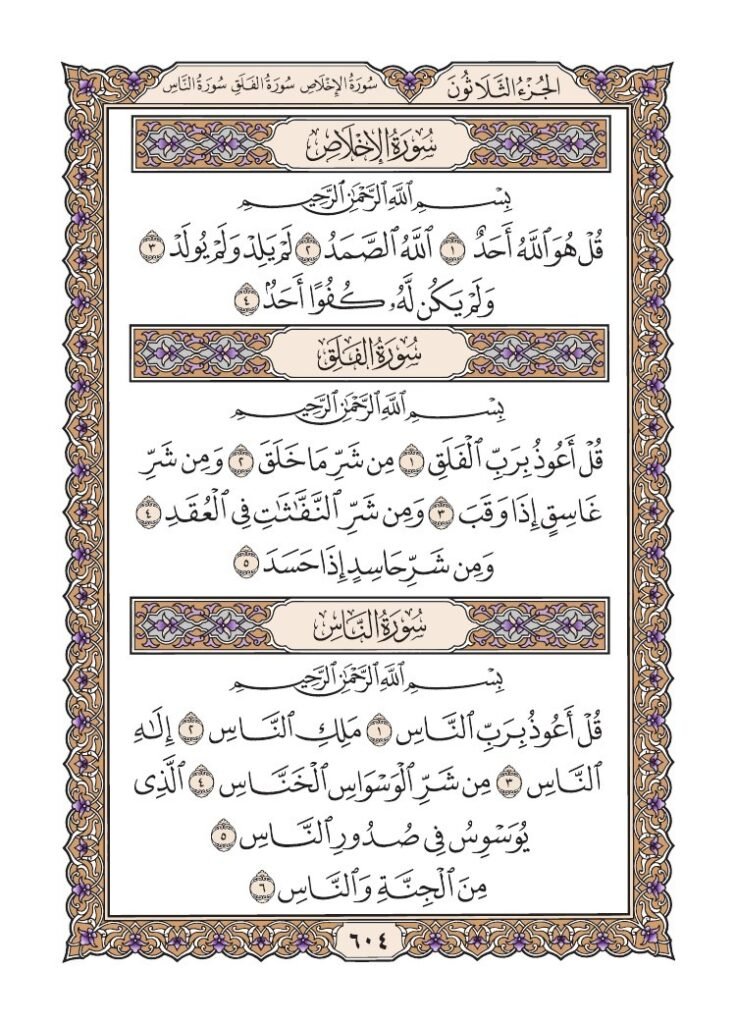
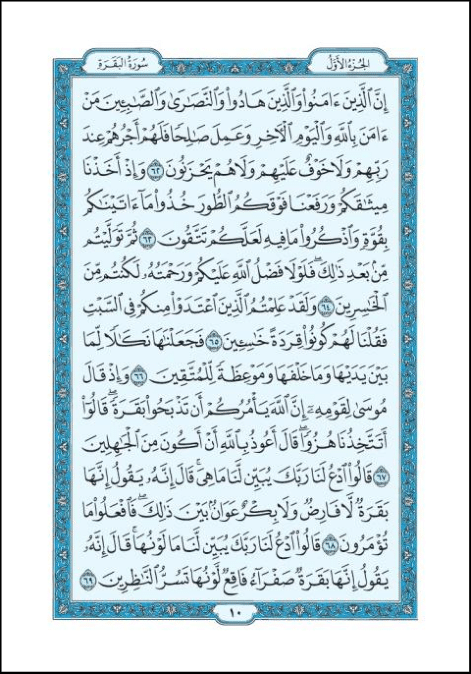
Here’s how to memorize a page of Quran by yourself each day using a structured approach:
Step 1: Divide the Page into Sections
- Break down the Quran page into five manageable sections. Each section should ideally have around three lines, totaling approximately 20 words.
Step 2: Memorize Throughout the Day
- Distribute your memorization throughout the day. Dedicate ten minutes after each of the five daily prayers (Fajr, Dhuhr, Asr, Maghrib, Isha) to learn one section (three lines).
Step 3: Review Before Sleep
- After the Witr prayer, spend ten minutes reviewing all the sections you memorized that day. This reinforces what you learned and strengthens memorization.
By following this plan, you can effectively memorize a page of Quran each day through consistent practice and spaced repetition. Remember, the key is to find a routine that works for you and stick to it.
Read also: How Long Does It Take to Memorize One Page of the Quran?
How Much Time Does it Take to Memorize the Quran by Yourself?
The duration required for memorizing the Quran independently varies significantly, with averages ranging from one to five years. The time it takes to memorize the Quran on your own can vary greatly, but it generally takes longer than memorizing with a teacher. Here’s why:
- Lack of Guidance: Teachers can tailor memorization techniques to your learning style and help you over difficult passages.
- Staying Motivated: Sticking to a daily memorization routine can be challenging by yourself. A teacher or group setting can provide support and encouragement.
While it is possible, expect it to take a range from1 to 5 years, or may be even reach to 7 years for self-directed memorization.
Here are some tips to improve your chances of success memorizing the Quran on your own:
- Focus on Consistency: Even short, daily memorization sessions are more effective than cramming larger amounts infrequently.
- Find a Method that Works for You: There are different memorization techniques. Experiment to find what helps you retain information best.
- Seek Out Resources: Consider online Quran courses or recordings of Quran recitations to aid your memorization.
Importance of Having a Tutor While Memorizing the Quran by Yourself
While the process of memorizing the Quran can be undertaken independently, having a tutor offers significant benefits that can enhance your learning and success. Here’s why a tutor is important even when memorizing by yourself:
- Guaranteed Accuracy: A qualified tutor, ideally a Hafiz (Quran memorizer), ensures your pronunciation and recitation adhere to Tajweed rules. They can correct mistakes you might miss on your own, preserving the authenticity of your memorization.
- Motivation and Feedback: The journey of memorizing the Quran can be long. A tutor can provide encouragement, celebrate your achievements, and offer valuable feedback to keep you focused and progressing.
- Guidance and Expertise: You might encounter challenges or have questions during memorization. A tutor can offer guidance, answer your questions, and provide additional learning resources to deepen your understanding.
- Role Model and Support System: A good tutor embodies the proper recitation and exemplifies the values embedded within the Quran. Their dedication and knowledge can inspire you and create a supportive learning environment.
So, memorizing the Quran by yourself emphasizes your self-initiative and dedication, but it shouldn’t exclude seeking essential guidance from a qualified teacher or scholar. Their role is to support your efforts and ensure you’re memorizing the Quran accurately and effectively.
Book a FREE session with one of our Ijazah-certified teachers

Remember, the pursuit of memorizing the Quran is like a marathon, not a sprint. Be patient with yourself and celebrate your progress along the way.
Memorize the Quran at Your Own Pace
Join our expert tutors and begin your Hifz journey with a personalized plan.
Start Your Free TrialStart Your Hifz Path with the Right Support at Hifz Quran Online Academy
Solo effort builds momentum. Expert guidance builds permanence. Both are necessary.
Hifz Quran Online Academy offers:
- Certified Huffaz with verified credentials and structured methodology
- Personalized 1-on-1 instruction at your individual pace
- Programs for adults, children, and ladies — including Quran Memorization and Hifz for Kids and Quran Hifz for Ladies
- Flexible scheduling across all global time zones
- The Al-Menhaj Book for students who need to establish foundational reading first
- A free trial lesson — no commitment required
Book your free trial and discover what structured Hifz guidance changes for your memorization.
Choose the program that fits your needs:
- Quran Memorization Course (comprehensive Hifz for all ages)
- Quran Memorization and Hifz for Kids
- Online Quran Memorization Courses for Adults
- Quran Hifz for Ladies.
Book your free trial lesson today and begin your journey to Hifz with expert guidance every step of the way.

Frequently Asked Questions About Memorizing Quran by Yourself
Can I Memorize Quran by Myself If I Don’t Know Arabic?
You can memorize Quran by yourself without knowing Arabic. The memorization process relies on phonetic repetition, not linguistic comprehension. However, non-Arabic speakers must use a reliable audio reference from a qualified Qari and should seek periodic Tajweed review, as pronunciation errors are harder to self-detect without understanding the language.
How Long Does It Take to Memorize Quran Independently?
For adult non-Arabic speakers memorizing independently at 30 minutes per day, completing the full Quran typically takes 5–8 years without structured guidance. With a certified instructor and proper revision ratios, most dedicated adult students complete Hifz in 3–5 years. Consistency of daily practice matters more than session length.
What Is the Difference Between Memorization and Hifz?
Memorization refers to the initial learning of Quranic text. Hifz — true preservation — requires that memorized material remains accurate and retrievable across time through consistent Muraja’ah. A student can memorize all 30 Juz and still not have Hifz if revision has been neglected and recall is unreliable under recitation pressure.
How Many Lines Per Day Should I Memorize Alone?
For independent adult learners, 3–5 lines per day is the sustainable target for long-term retention. Exceeding this without a proportionally increased revision system produces fragile memorization. Students who memorize 5 lines daily must revise at least 2–3 pages of previously memorized material in the same session to maintain retention stability.
Do I Need to Memorize Quran in Order?
Traditional Hifz methodology begins with Juz Amma (Juz 30) and works backward, or starts from Al-Baqarah and works sequentially. Both approaches are valid. What matters is maintaining internal sequential order within each Surah and Juz — skipping between non-adjacent sections creates sequence confusion that is difficult to resolve without structured revision.
Related Articles
Memorizing Quran




Leave a Reply