 Memorizing Quran
| Key Takeaways |
| Memorizing the Quran in 4 months requires completing approximately 5 pages daily across 120 days of focused, consistent effort. |
| The 4-month plan works only when new memorization is paired with daily Muraja’ah — skipping revision causes rapid retention collapse. |
| Non-Arabic speakers must master Tajweed pronunciation before beginning Hifz, or errors become permanently embedded in memory. |
| A structured weekly audit of weak Juz prevents accumulation of forgotten portions that derail the entire 4-month timeline. |
Memorizing the Quran in 4 months is demanding, but it is achievable — and I say that not as a theoretical possibility, but as something I have watched students accomplish firsthand.
The path requires approximately 5 pages of new memorization daily across roughly 120 days, paired with disciplined revision that must run parallel from day one. For non-Arabic speakers especially, this timeline leaves no room for an unstructured approach.
What separates students who reach this goal from those who stall at Juz 5 or 6 is not raw ability — it is methodology.
1. Calculate Your Exact Daily Target Before You Memorize a Single Verse
To memorize the Quran in 4 months, you need a mathematically precise daily commitment, not a vague intention to “memorize a lot.” The Quran contains 604 pages across 30 Juz’. Over 120 days, that equals approximately 5 pages of new memorization per day — every single day, without exception.
Most students underestimate what 5 pages daily actually demands. Each page of the standard Mushaf (15-line Madinah print) contains roughly 10–15 lines.
At 5 pages, you are committing to memorizing 50–75 lines from scratch each day while simultaneously reviewing everything memorized previously.
| Timeframe | Total Pages | Daily New Pages | Total Days |
| 4 months | 604 | ~5 pages | 120 days |
| 1 year | 604 | ~1.7 pages | 365 days |
| 2 years | 604 | ~0.8 pages | 730 days |
If you are starting Hifz from scratch, honestly assess whether 5 pages daily is sustainable given your schedule, age, and prior Quran fluency.
For many working adults, the Quran memorization in 1 year framework may be more realistic. The 4-month goal is specifically suited to full-time students or those who can dedicate 6–8 hours daily to Hifz.
For students committed to this intensive pace, our Quran Memorization Course is structured to support exactly this kind of accelerated timeline, with certified instructors who help calibrate your daily target from the first session.
Book a free trial to start your Hifz path today

2. Build Your Memorization Foundation on Correct Tajweed From Day One
Before memorizing a single verse, you must be able to recite it correctly. Tajweed is not an optional layer to add later — mispronounced letters embedded in memory become extraordinarily difficult to correct after months of repetition have reinforced them.
For non-Arabic speakers, the critical Tajweed elements to master before beginning intensive Hifz include: correct Makhraj (articulation point) for Arabic letters that have no English equivalent — particularly ع (Ayn), ح (Ha), خ (Kha), and ق (Qaf). Additionally, foundational rules of Ghunnah (nasalization), Idghaam (merging), and Ikhfa’ (concealment) govern how Nun Sakinah and Tanween are pronounced across verse boundaries.
Students who begin 5-pages-per-day memorization without resolving these foundational issues consistently face a painful correction phase around Juz 3 or 4 — where the errors have multiplied and the correction work takes longer than the original memorization would have.
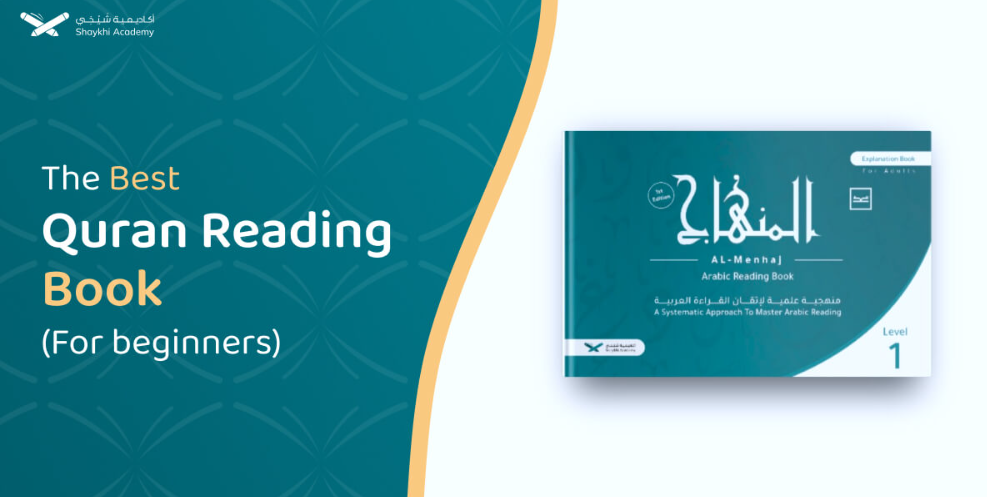
If your Quran reading is not yet fluent and accurate, beginning with the Al-Menhaj Book — the structured Quran reading course authored by Luqman ElKasabany — will save you significant time in the long run.
For further guidance on getting started correctly, our article on how to start memorizing Quran covers the essential prerequisites in detail.
Explore and Study Al-Menhaj Book for FREE
3. Memorize After Fajr to Maximize Retention in Your 4-Month Window
The timing of your memorization session is not a preference — it is a pedagogical decision with measurable consequences for retention. Students who memorize after Fajr consistently outperform evening memorizers in retention assessments at Hifz Quran Online Academy, and the performance gap becomes pronounced after the second Juz.
The post-Fajr window offers a combination of conditions that are scientifically and spiritually aligned for Hifz: the mind is rested, distractions are minimal, and the spiritual state following Fajr prayer enhances focus and intention.
The Prophet ﷺ made du’a for blessing in the early hours of the morning, and classical Hifz scholars consistently identified the time after Fajr as the optimal memorization window.
Structure your daily session as follows:
- After Fajr (primary session): 2–3 hours for new memorization — 5 pages divided into two segments of 2–3 pages each, with a short break between
- After Asr or Dhuhr (revision session): 1.5–2 hours for Muraja’ah of previously memorized material
- After Isha (light review): 30–45 minutes for listening to the day’s new memorization via audio recitation
For a detailed breakdown of optimal timing, our guide on the best times to memorize Quran covers each prayer window with practical scheduling advice.
Shots Videos from Our Courses
Memorize the Quran at Your Own Pace
Join our expert tutors and begin your Hifz journey with a personalized plan.
Start Your Free Trial4. Apply the Rabṭ Technique to Memorize 5 Pages Daily Without Losing Sequence
Memorizing individual verses in isolation is one of the most common structural errors in intensive Hifz. At 5 pages daily, sequence confusion becomes a serious problem without a deliberate connection technique. Rabṭ — the practice of connecting the end of each verse to the opening of the next — is the technical solution.
Before moving to any new verse, recite the previous verse completely, then recite the new one, then connect both together without pause. This trains the memory to recognize verses not as isolated units but as linked chains.
When sequence confusion occurs — and at this memorization pace, it will — the Rabṭ anchor points allow the mind to self-correct.
Apply Rabṭ not only between individual verses but between pages: always end each new page’s memorization session by reciting from the top of that page to its end without looking. Then connect it to the previous page.
This page-level Rabṭ is what prevents the common experience of knowing each page separately but losing coherence when reciting extended passages.
Read Also: How to Memorize Surah Jinn?
5. Follow a Non-Negotiable Muraja’ah Ratio That Protects Everything You Have Memorized
New memorization without parallel revision is the single fastest way to fail a 4-month Hifz plan. Within 24–48 hours of memorizing new material, the forgetting curve begins its steep decline. For a student memorizing 5 pages daily, unrevised material becomes unrecoverable within a week.
The revision ratio for a 4-month intensive plan must be structured precisely:
| Week | New Pages/Day | Daily Muraja’ah (Pages) | Total Daily Load |
| Weeks 1–2 | 5 | 5 (recent pages) | 10 pages |
| Weeks 3–4 | 5 | 10 (last 2 weeks) | 15 pages |
| Month 2+ | 5 | 15–20 (accumulated) | 20–25 pages |
| Month 3–4 | 5 | 25–30 (full Juz rotation) | 30–35 pages |
The revision load grows each week as the accumulated corpus expands. By month three, daily Muraja’ah will take as long as — or longer than — new memorization. This is expected and correct. Our guide to revising memorized Quran details the Muraja’ah rotation strategies that prevent any Juz from going cold.
For adult students managing this intensive revision load, our Online Quran Memorization Courses for Adults include structured Muraja’ah scheduling as a core component of every session — not an afterthought.
Enroll in our Quran Memorization Course for Adults with a free trial

6. Begin With Juz Amma and Then Follow the Sequential Order of the Mushaf
The starting point of your 4-month plan matters significantly for both momentum and methodology. Beginning with Juz 30 (Juz Amma) offers the advantages of shorter Surahs, high familiarity for most Muslims from Salah, and earlier wins that build confidence.
Most non-Arabic speakers already have partial memorization of Juz Amma — consolidating and formalizing this provides a strong foundation.
After completing Juz Amma, the most pedagogically sound approach is sequential memorization beginning from Surah Al-Baqarah (Juz 1). The Quran’s thematic and linguistic coherence means that sequential memorization builds internal cross-referencing that supports retention.
Jumping between non-adjacent Surahs creates isolated memory islands that are harder to maintain through Muraja’ah.
Allah ﷻ describes the Quran’s purpose and recitation in Surah Al-Muzzammil:
وَرَتِّلِ ٱلْقُرْءَانَ تَرْتِيلًا
Wa rattil il-Qur’āna tartīlā
“And recite the Quran with measured recitation.” (Al-Muzzammil 73:4)
This verse is not merely a command about pace — classical scholars of Tajweed understood Tarteel to encompass precision in articulation, comprehension, and the deliberate manner in which each word is given its due. For Hifz students, Tarteel is the standard of memorization quality, not just recitation style.
You can find guidance on which Surahs to prioritize in easy Surahs to memorize to plan the optimal memorization sequence for your 4-month schedule.
Memorize the Quran at Your Own Pace
Join our expert tutors and begin your Hifz journey with a personalized plan.
Start Your Free Trial7. Conduct a Weekly Audit of Every Juz to Prevent Retention Collapse
A 4-month Hifz plan moves fast enough that weak spots accumulate silently. Without a structured weekly audit, a student can reach Juz 15 while Juz 3 has deteriorated to the point of near-complete loss — a situation I have witnessed more than once with intensive-track students.
The weekly audit is a dedicated session — ideally after Jumu’ah on Fridays — in which you recite every memorized Juz consecutively, from memory, without prompting.
Mark which Juz and which pages require strengthening. These become the priority additions to the following week’s Muraja’ah schedule.
Weekly audit protocol:
- Recite each Juz from memory, at Tarteel pace, without looking
- Mark any verse where you hesitated, stopped, or required correction
- Add those pages to daily Muraja’ah for the following week
- Reduce new memorization by 1 page on days when audit-flagged pages require intensive revision
This audit is what separates students who complete 30 Juz of Hifz from those who complete 30 Juz of memorization — the distinction being whether the accumulated corpus is solid or fragile.
For a complete breakdown of how to structure your memorization schedule around these audits, see our Quran memorization schedule guide.
8. Use Audio Repetition to Reinforce What Your Eyes Have Memorized
One of the most underused tools in intensive Hifz — particularly for non-Arabic speakers — is deliberate audio exposure. Memorization through visual reading alone produces what I call “visual-only retention”: the student can follow text but cannot recite independently in the dark or during Salah when no Mushaf is present.
Choose one reciter whose Tajweed and pace you will use consistently throughout your 4-month plan. Switching between reciters mid-program causes confusion in phrasing and melodic pattern that disrupts memory.
Our guide to the best reciter to memorize Quran will help you make this selection based on pace, clarity, and Makhraj precision.
Sheikh Mahmoud Khalil Al-Husary’s Muallim (teaching) recitation is particularly effective for this pre-memorization listening step.

Listen to the day’s new pages during Isha review. Listen during commuting, cooking, or any low-focus activity.
Passive audio exposure reinforces the neural pathways built during active memorization and dramatically reduces revision time in subsequent weeks.
Samples Videos from Classes
Read Also: How to Memorize a Surah Fast?
9. Work With a Certified Hafiz Who Can Correct You Before Errors Solidify
Self-directed Hifz at 5 pages daily is a high-risk methodology. Without a qualified instructor reviewing your recitation regularly, mispronunciations, Tajweed errors, and sequence mistakes accumulate invisibly.
By the time a self-directed student discovers an error, it has often been repeated hundreds of times — and repetition is precisely what Hifz training uses to embed material permanently.
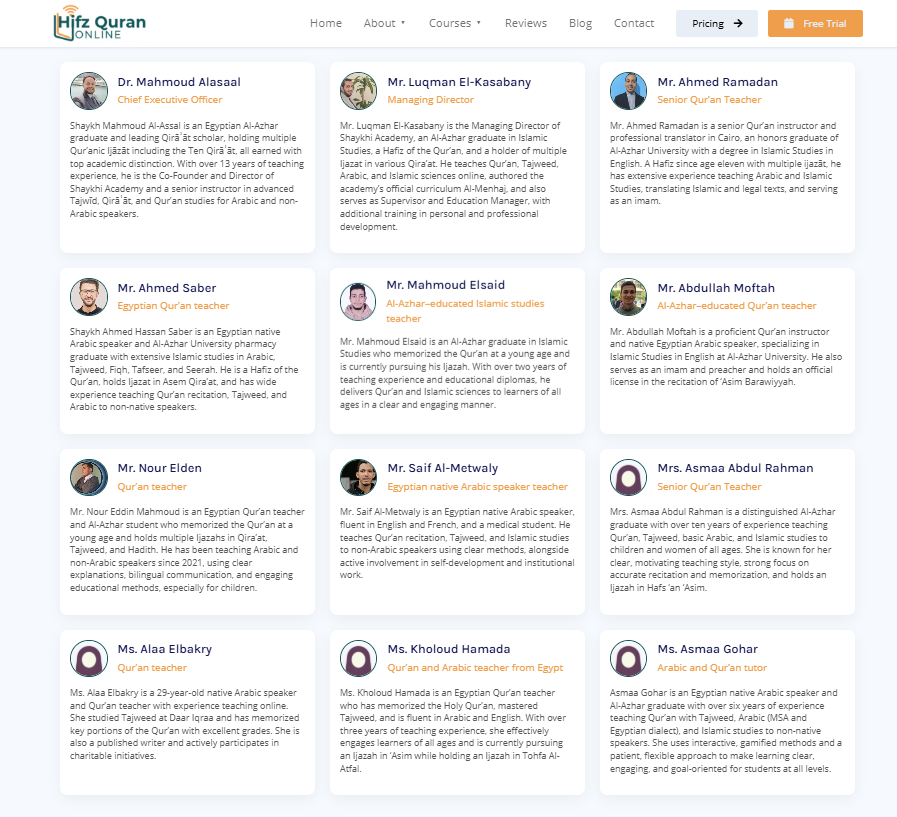
Working with a certified Hafiz who listens to your recitation, corrects your Makhraj, and monitors your revision ratio is not supplementary to this program — it is the program.
The role of the instructor in classical Hifz methodology was never decorative. The Ijazah tradition exists precisely because Quran transmission has always been teacher-to-student, with direct oral correction.
At Hifz Quran Online Academy, our Online Quran Memorization Courses for Adults pair every student with an Ijazah-certified Azhari teachers for 1-on-1 sessions, structured around the student’s individual pace and schedule. For those exploring whether this path is right for them, a free trial lesson is available with no commitment required.
Book a FREE session with one of our Ijazah-certified teachers
You can also learn more about what the full Hifz achievement looks like in our guide on how to become a Hafiz — including the qualifications, timelines, and milestones involved.
Our Students Reviews
Memorize the Quran at Your Own Pace
Join our expert tutors and begin your Hifz journey with a personalized plan.
Start Your Free TrialStart Your 4-Month Quran Memorization Plan at Hifz Quran Online Academy
Memorizing the Quran in 4 months is one of the most ambitious Hifz goals a student can set — and it is achievable with the right structure. At Hifz Quran Online Academy, we provide exactly that structure:
- Certified Huffaz with verified credentials and classroom experience
- Personalized 1-on-1 instruction calibrated to your individual pace
- Flexible scheduling across all global time zones
- Methodology designed for non-Arabic speakers — from Tajweed foundation to full completion
- Free trial lesson — no commitment, no risk
Book your free trial lesson today and take the first concrete step toward completing your Quran memorization, Insha’Allah.
Memorize the Quran at Your Own Pace
Join our expert tutors and begin your Hifz journey with a personalized plan.
Start Your Free TrialChoose the program that fits your needs:
- Quran Memorization Course (comprehensive Hifz for all ages)
- Quran Memorization and Hifz for Kids
- Online Quran Memorization Courses for Adults
- Quran Hifz for Ladies.
Book your free trial lesson today

Conclusion
Memorizing the Quran in 4 months demands precision, not just passion. The students who reach completion are not those with the most natural ability — they are those who planned accurately, revised consistently, corrected their Tajweed before errors solidified, and worked with a qualified instructor who could course-correct before problems accumulated.
The 10 steps above are not motivational principles — they are the operational requirements of a successful 4-month Hifz plan. Execute them with sincerity and discipline, and the goal is within reach.
Alhamdulillah, the Quran was revealed to be memorized — and Allah ﷻ has made it easy for those who approach it with the right method and the right intention.
Frequently Asked Questions About Memorizing the Quran in 4 Months
Is It Realistically Possible to Memorize the Quran in 4 Months?
Memorizing the Quran in 4 months requires memorizing approximately 5 pages daily for 120 consecutive days, alongside structured daily Muraja’ah. It is best suited for full-time students or those who can dedicate 6–8 hours daily. Working adults with fixed schedules may find a longer timeline more sustainable without sacrificing retention quality.
How Many Hours Per Day Does a 4-Month Hifz Plan Require?
A realistic 4-month Quran memorization plan requires 5–8 hours of daily engagement: approximately 2–3 hours for new memorization after Fajr, 1.5–2 hours for Muraja’ah in the afternoon, and 30–45 minutes of audio review in the evening. As memorized material accumulates, the revision portion expands and becomes the dominant time commitment.
What Is the Difference Between Memorizing Quran in 4 Months Versus 1 Year?
The 4-month plan requires 5 pages of new memorization daily, while a 1-year Hifz plan requires approximately 1.7 pages daily — a significantly more manageable pace for working adults. The 1-year approach allows deeper consolidation of each Juz before advancing, typically producing stronger long-term retention. The 4-month plan demands full-time commitment and is better suited to students without competing professional or academic obligations.
Related Articles
Memorizing Quran






Leave a Reply