 Memorizing Quran
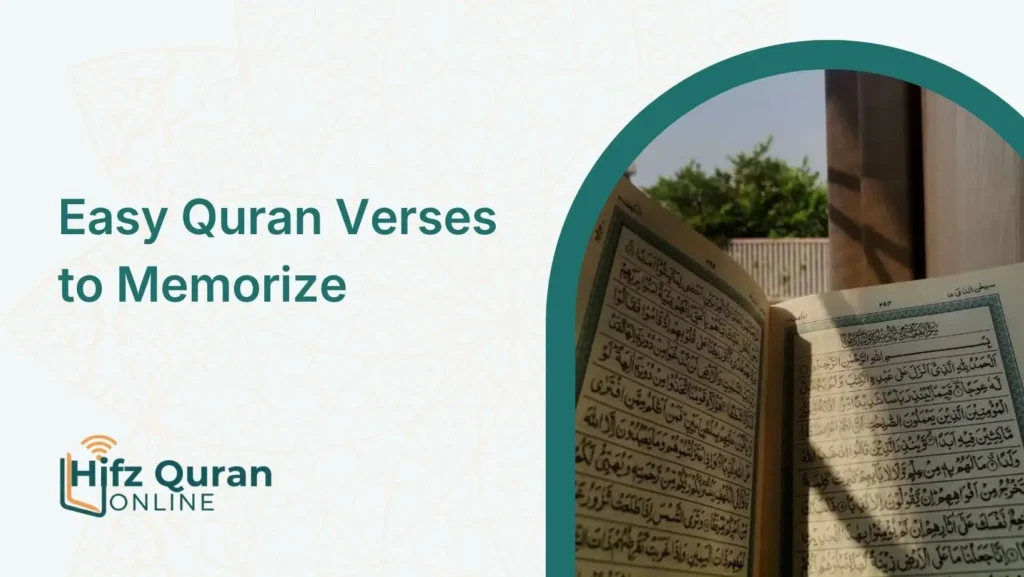
Starting your Hifz with the right verses is not a shortcut — it is sound pedagogy. When non-Arabic speakers choose easy Quran verses to memorize early in their path, they build the phonetic confidence and rhythmic familiarity that makes the entire memorization process more sustainable.
The mistake I see most often is students beginning with whatever comes first alphabetically, rather than what is most accessible structurally.
The verses below were selected based on three criteria: phonetic accessibility for non-native Arabic speakers, rhythmic regularity that aids retention, and frequency of use in daily Salah and Islamic life. Each one gives you a meaningful foothold — and together, they form the foundation of a lifelong Hifz practice.
1. Al-Fatiha Verses Are the Most Accessible Starting Point for Any Memorizer
Surah Al-Fatiha is the single best entry point for non-Arabic speakers beginning memorization. Its seven verses are short, rhythmically consistent, and repeated in every unit of Salah — which means your auditory memory is already partially trained before you begin formal memorization.
Students who start here build phonetic confidence faster than those who start with unfamiliar Surahs.
If you are still building your Quran reading foundation, the Al-Menhaj Book — authored by Luqman ElKasabany and developed by instructors with 25+ years of experience — provides the reading prerequisite skills that make memorizing Al-Fatiha significantly smoother.
بِسۡمِ ٱللَّهِ ٱلرَّحۡمَٰنِ ٱلرَّحِيمِ ١ ٱلۡحَمۡدُ لِلَّهِ رَبِّ ٱلۡعَٰلَمِينَ ٢ ٱلرَّحۡمَٰنِ ٱلرَّحِيمِ ٣ مَٰلِكِ يَوۡمِ ٱلدِّينِ ٤ إِيَّاكَ نَعۡبُدُ وَإِيَّاكَ نَسۡتَعِينُ ٥ ٱهۡدِنَا ٱلصِّرَٰطَ ٱلۡمُسۡتَقِيمَ ٦ صِرَٰطَ ٱلَّذِينَ أَنۡعَمۡتَ عَلَيۡهِمۡ غَيۡرِ ٱلۡمَغۡضُوبِ عَلَيۡهِمۡ وَلَا ٱلضَّآلِّينَ ٧
Bismi llāhi r-raḥmāni r-raḥīm. Al-ḥamdu lillāhi rabbi l-ʿālamīn. Ar-raḥmāni r-raḥīm. Māliki yawmi d-dīn. Iyyāka naʿbudu wa-iyyāka nastaʿīn. Ihdinā ṣ-ṣirāṭa l-mustaqīm. Ṣirāṭa lladhīna anʿamta ʿalayhim ghayri l-maghḍūbi ʿalayhim wa-lā ḍ-ḍāllīn.
“In the name of Allah, the Entirely Merciful, the Especially Merciful. All praise is due to Allah, Lord of the worlds — the Entirely Merciful, the Especially Merciful, Sovereign of the Day of Recompense. It is You we worship and You we ask for help. Guide us to the straight path — the path of those upon whom You have bestowed favor, not of those who have evoked anger or of those who are astray.” (Al-Fatiha 1:1–7)
How to memorize Surah Al-Fatiha?
Divide Al-Fatiha into three portions — verses 1–2, verses 3–5, and verses 6–7.
Memorize each portion across three sessions, connecting each new portion to the previous one using the Rabṭ technique: recite from the beginning each time you add a new section.
Within 4–5 days of consistent 15-minute sessions, most students achieve fluent recall.
Memorize the Quran at Your Own Pace
Join our expert tutors and begin your Hifz journey with a personalized plan.
Start Your Free Trial2. Ayat al-Kursi Rewards the Memorization Effort with the Highest Daily Utility
Ayat al-Kursi — verse 255 of Surah Al-Baqarah — is among the most rewarding single verses a Muslim can memorize. Ayat al-Kursi phonetic structure follows a natural rhythmic cadence, and its thematic unity makes it easier to hold in memory as a single coherent unit rather than isolated fragments.
The Prophet ﷺ described it as the greatest verse in the Quran, as authentically reported in Sahih Muslim (810).
ٱللَّهُ لَآ إِلَٰهَ إِلَّا هُوَ ٱلۡحَيُّ ٱلۡقَيُّومُۚ لَا تَأۡخُذُهُۥ سِنَةٌ وَلَا نَوۡمٌۚ لَّهُۥ مَا فِي ٱلسَّمَٰوَٰتِ وَمَا فِي ٱلۡأَرۡضِۗ مَن ذَا ٱلَّذِي يَشۡفَعُ عِندَهُۥٓ إِلَّا بِإِذۡنِهِۦۚ يَعۡلَمُ مَا بَيۡنَ أَيۡدِيهِمۡ وَمَا خَلۡفَهُمۡۖ وَلَا يُحِيطُونَ بِشَيۡءٍ مِّنۡ عِلۡمِهِۦٓ إِلَّا بِمَا شَآءَۚ وَسِعَ كُرۡسِيُّهُ ٱلسَّمَٰوَٰتِ وَٱلۡأَرۡضَۖ وَلَا يَـُٔودُهُۥ حِفۡظُهُمَاۚ وَهُوَ ٱلۡعَلِيُّ ٱلۡعَظِيمُ
Allāhu lā ilāha illā huwa l-ḥayyu l-qayyūm. Lā taʾkhudhuhu sinatun wa-lā nawm. Lahu mā fī s-samāwāti wa-mā fī l-arḍ. Man dhā lladhī yashfaʿu ʿindahu illā bi-idhnih. Yaʿlamu mā bayna aydīhim wa-mā khalfahum. Wa-lā yuḥīṭūna bi-shayʾin min ʿilmihi illā bimā shāʾ. Wasiʿa kursiyyuhu s-samāwāti wa-l-arḍ. Wa-lā yaʾūduhu ḥifẓuhumā. Wa-huwa l-ʿaliyyu l-ʿaẓīm.
“Allah — there is no deity except Him, the Ever-Living, the Sustainer of existence. Neither drowsiness overtakes Him nor sleep. To Him belongs whatever is in the heavens and whatever is on the earth. Who is it that can intercede with Him except by His permission? He knows what is before them and what will be after them, and they encompass not a thing of His knowledge except for what He wills. His Kursi extends over the heavens and the earth, and their preservation tires Him not. And He is the Most High, the Most Great.” (Al-Baqarah 2:255)
How to memorize Ayat al-Kursi?
Break this verse into five natural clauses separated by the waqf (pause) markers.
Learn one clause per session, then chain them using Rabṭ recitation — starting from the beginning each time you add a new clause.
After five sessions, recite the full verse 20 times aloud before Fajr and after Isha. This dual-anchoring at the day’s beginning and end accelerates long-term retention significantly.
This Tadabbur-based approach, reflecting on meaning while memorizing, is a technique the Quran Memorization Course at Hifz Quran Online Academy incorporates systematically into its curriculum.
Book a free trial to start your Hifz path today

3. Surah Al-Ikhlas Offers Maximum Memorization Return for Its Extremely Short Length
Surah Al-Ikhlas is four verses, each averaging just four words. For a non-Arabic speaker, this is among the easiest Quran passages to memorize, yet its theological weight — affirming the absolute oneness of Allah — makes it one of the most recited Surahs in a Muslim’s life.
قُلۡ هُوَ ٱللَّهُ أَحَدٌ ١ ٱللَّهُ ٱلصَّمَدُ ٢ لَمۡ يَلِدۡ وَلَمۡ يُولَدۡ ٣ وَلَمۡ يَكُن لَّهُۥ كُفُوًا أَحَدٌۢ ٤
Qul huwa llāhu aḥad. Allāhu ṣ-ṣamad. Lam yalid wa-lam yūlad. Wa-lam yakun lahu kufuwan aḥad.
“Say: He is Allah, the One. Allah, the Eternal Refuge. He neither begets nor is born. Nor is there to Him any equivalent.” (Al-Ikhlas 112:1–4)
Shots Videos from Our Courses
Memorize the Quran at Your Own Pace
Join our expert tutors and begin your Hifz journey with a personalized plan.
Start Your Free TrialHow to memorize Surah Al-Ikhlas?
Recite all four verses together as one unit from the first session — do not separate them. The end-rhyme pattern (aḥad, ṣamad, yūlad, aḥad) is a natural auditory anchor.
Recite it 30 times consecutively on day one, then incorporate it into your Salah immediately. Active use during prayer is one of the most effective Muraja’ah tools available for short Surahs.
Students enrolled in the Online Quran Memorization Courses for Adults at Hifz Quran Online Academy typically secure this Surah within a single focused session.
Enroll in our Quran Memorization Course for Adults with a free trial

4. The Last Two Verses of Surah Al-Baqarah Carry Both Spiritual Weight and Memorization Ease
Verses 285–286 of Surah Al-Baqarah — known as the “Khawatim Al-Baqarah” — are among the most memorized passages outside of Juz Amma.
Their internal repetition of the phrase wa-qālū samiʿnā wa-aṭaʿnā and the rhythmic symmetry of verse 286 make them more accessible than their length suggests.
Learning them also builds confidence for tackling longer verse sequences. For a structured approach to how to memorize the Quran beyond individual verses, a systematic method matters enormously.
ءَامَنَ ٱلرَّسُولُ بِمَآ أُنزِلَ إِلَيۡهِ مِن رَّبِّهِۦ وَٱلۡمُؤۡمِنُونَۚ كُلٌّ ءَامَنَ بِٱللَّهِ وَمَلَٰٓئِكَتِهِۦ وَكُتُبِهِۦ وَرُسُلِهِۦ لَا نُفَرِّقُ بَيۡنَ أَحَدٍ مِّن رُّسُلِهِۦۚ وَقَالُواْ سَمِعۡنَا وَأَطَعۡنَاۖ غُفۡرَانَكَ رَبَّنَا وَإِلَيۡكَ ٱلۡمَصِيرُ ٢٨٥ لَا يُكَلِّفُ ٱللَّهُ نَفۡسًا إِلَّا وُسۡعَهَاۚ لَهَا مَا كَسَبَتۡ وَعَلَيۡهَا مَا ٱكۡتَسَبَتۡۗ رَبَّنَا لَا تُؤَاخِذۡنَآ إِن نَّسِينَآ أَوۡ أَخۡطَأۡنَاۚ رَبَّنَا وَلَا تَحۡمِلۡ عَلَيۡنَآ إِصۡرًا كَمَا حَمَلۡتَهُۥ عَلَى ٱلَّذِينَ مِن قَبۡلِنَاۚ رَبَّنَا وَلَا تُحَمِّلۡنَا مَا لَا طَاقَةَ لَنَا بِهِۦۖ وَٱعۡفُ عَنَّا وَٱغۡفِرۡ لَنَا وَٱرۡحَمۡنَآۚ أَنتَ مَوۡلَىٰنَا فَٱنصُرۡنَا عَلَى ٱلۡقَوۡمِ ٱلۡكَٰفِرِينَ ٢٨٦
Āmana r-rasūlu bimā unzila ilayhi min rabbihi wa-l-muʾminūn. Kullun āmana billāhi wa-malāʾikatihi wa-kutubihi wa-rusulihi lā nufarriqu bayna aḥadin min rusulihi. Wa-qālū samiʿnā wa-aṭaʿnā. Ghufranaka rabbanā wa-ilayka l-maṣīr. Lā yukallifu llāhu nafsan illā wusʿahā. Lahā mā kasabat wa-ʿalayhā mā ktasabat. Rabbanā lā tuʾākhidhnā in nasīnā aw akhṭaʾnā. Rabbanā wa-lā taḥmil ʿalaynā iṣran kamā ḥamaltahu ʿalā lladhīna min qablinā. Rabbanā wa-lā tuḥammilnā mā lā ṭāqata lanā bih. Waʿfu ʿannā wa-ghfir lanā wa-rḥamnā. Anta mawlānā fa-nṣurnā ʿalā l-qawmi l-kāfirīn.
“The Messenger has believed in what was revealed to him from his Lord, and so have the believers. All of them have believed in Allah and His angels and His books and His messengers, saying: ‘We make no distinction between any of His messengers.’ And they say: ‘We hear and we obey. We seek Your forgiveness, our Lord, and to You is the destination.’ Allah does not burden a soul beyond that it can bear. It will have the consequence of what good it has gained, and it will bear the consequence of what evil it has earned. Our Lord, do not impose blame upon us if we forget or make error. Our Lord, lay not upon us a burden like that which You laid upon those before us. Our Lord, burden us not with that which we have no ability to bear. Pardon us; forgive us; have mercy upon us. You are our protector, so give us victory over the disbelieving people.” (Al-Baqarah 2:285–286)
How to memorize the last two verses of Surah Al-Baqarah?
Verse 285 should be memorized first as a complete unit across two sessions. Verse 286 contains four Rabbanā supplications — use these as natural memory checkpoints. After memorizing each Rabbanā clause, chain back to the beginning.
This sequential anchoring technique prevents the most common confusion point, which is mixing the order of the four supplications.
Memorize the Quran at Your Own Pace
Join our expert tutors and begin your Hifz journey with a personalized plan.
Start Your Free Trial5. Surah Ar-Rahman’s Repeated Refrain Makes It One of the Most Retention-Friendly Passages in the Quran
Surah Ar-Rahman contains the refrain
فَبِأَيِّ آلَاءِ رَبِّكُمَا تُكَذِّبَانِ (Fa-bi-ayyi ālāʾi rabbikumā tukadhdhibān — “So which of the favors of your Lord would you deny?”) repeated 31 times across the Surah.
For a non-Arabic speaker, this structural repetition reduces new memorization load dramatically.
The opening verses are the ideal entry point:
ٱلرَّحۡمَٰنُ ١ عَلَّمَ ٱلۡقُرۡءَانَ ٢ خَلَقَ ٱلۡإِنسَٰنَ ٣ عَلَّمَهُ ٱلۡبَيَانَ ٤
Ar-raḥmān. ʿAllama l-qurʾān. Khalaqa l-insān. ʿAllamahu l-bayān.
“The Most Merciful. Taught the Quran. Created man. Taught him eloquence.” (Ar-Rahman 55:1–4)
How to memorize Surah Ar-Rahman?
First, isolate the refrain and memorize it perfectly in a single session — it is only 8 words.
Then memorize each surrounding passage as a unit bracketed by the refrain.
Whenever you add a new passage, recite: new passage → refrain → back to beginning.
This Rabṭ-based loop exploits the Surah’s structural design and makes long-term retention remarkably stable.
Students at Hifz Quran Online Academy who memorize Ar-Rahman as part of their early Hifz often report it as one of their most confidence-building experiences. This aligns with our observations on how to start memorizing the Quran — familiarity with recurring phrases is a decisive early advantage.
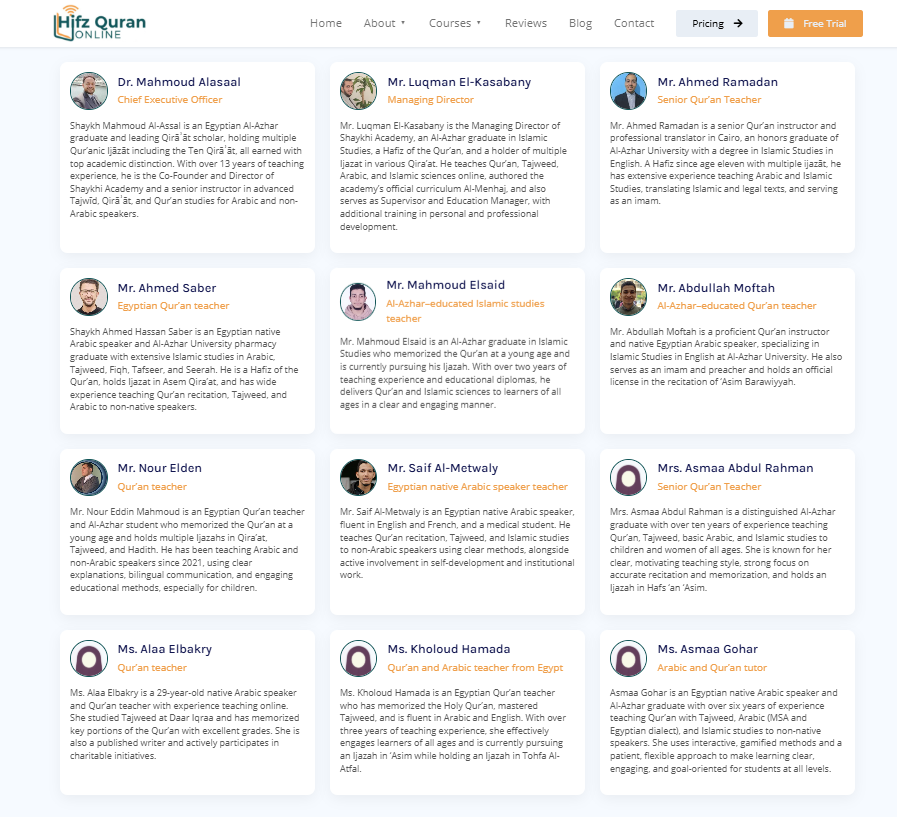
Meet our Ijazah-certified Azhari teachers
6. The First Verse of Surah Al-Mulk
Surah Al-Mulk is 30 verses and highly recommended for nightly recitation. Its opening verse is phonetically smooth and establishes the thematic anchor for everything that follows.
Beginning memorization here — then building verse by verse — is one of the most effective structured approaches for intermediate students.
For those planning a long-term Hifz schedule, our guide on developing a Quran memorization schedule provides the framework to build around passages like this one.
تَبَٰرَكَ ٱلَّذِي بِيَدِهِ ٱلۡمُلۡكُ وَهُوَ عَلَىٰ كُلِّ شَيۡءٍ قَدِيرٌ ١
Tabāraka lladhī bi-yadihi l-mulku wa-huwa ʿalā kulli shayʾin qadīr.
“Blessed is He in whose hand is dominion, and He is over all things competent.” (Al-Mulk 67:1)
How to memorize Surah Al-Mulk?
This verse is 11 words and divides naturally into two halves at al-mulku. Memorize each half separately, then join them.
On day two, memorize verse 2 and chain it to verse 1. Continue adding one verse per session.
By the time you reach verse 5, you will notice the Surah’s internal thematic rhythm, which makes the second half significantly easier than the first.
Read Also: How Long Does It Take to Memorize Surah Baqarah?
7. Verses 10 and 18 of Surah Al-Kahf
Many non-Arabic speakers assume only short Surahs are accessible. In practice, narrative verses with clear, flowing sentence structures — like those in Surah Al-Kahf — can be memorized efficiently because their meaning creates a natural mental image that supports retention.
إِذۡ أَوَى ٱلۡفِتۡيَةُ إِلَى ٱلۡكَهۡفِ فَقَالُواْ رَبَّنَآ ءَاتِنَا مِن لَّدُنكَ رَحۡمَةً وَهَيِّئۡ لَنَا مِنۡ أَمۡرِنَا رَشَدًا ١٠
Idh awaā l-fityatu ilā l-kahfi fa-qālū rabbanā ātinā min ladunka raḥmatan wa-hayyi llanā min amrinā rashadā.
“When the youths took refuge in the cave and said: ‘Our Lord, grant us from Yourself mercy and prepare for us from our affair right guidance.'” (Al-Kahf 18:10)
Read Also: How to Memorize One Page of Quran a Day?
How to memorize verses 10 and 18 of Surah Al-Kahf?
Read the English translation before beginning memorization — visualize the youths entering the cave and making this supplication. This semantic anchoring technique converts abstract Arabic sounds into a meaningful mental scene.
Research in memory science consistently confirms that meaning-based encoding produces stronger long-term recall than phonetic-only repetition. Combine it with 20 repetitions aloud after Fajr for optimal Makhraj precision.
Our Students Reviews
Memorize the Quran at Your Own Pace
Join our expert tutors and begin your Hifz journey with a personalized plan.
Start Your Free TrialRead Also: Easy Surahs to Memorize
Begin Your Hifz with Structured Guidance at Hifz Quran Online Academy
These verses are your starting point — not your ceiling. Real Hifz progress requires a structured methodology, daily consistency, and a qualified instructor who can correct your Tajweed before errors become habits.
Hifz Quran Online Academy offers:
- Certified Huffaz with verified credentials and classroom experience
- Personalized 1-on-1 instruction tailored to your pace and level
- Flexible scheduling across all global time zones
- Structured methodology built specifically for non-Arabic speakers
- Dedicated programs: Quran Memorization Courses for Adults, Hifz for Kids, and Quran Hifz for Ladies
- A free trial lesson — no commitment required
Book your free trial today and begin with expert guidance from the very first verse.
Choose the program that fits your needs:
- Quran Memorization Course (comprehensive Hifz for all ages)
- Quran Memorization and Hifz for Kids
- Online Quran Memorization Courses for Adults
- Quran Hifz for Ladies.
Book your free trial lesson today

Conclusion
The verses covered in this guide were not chosen randomly. Each one was selected because it offers non-Arabic speakers a combination of phonetic accessibility, structural repetition, and daily-life utility that makes early Hifz progress both achievable and sustainable. Starting with what is memorizable — rather than what is merely first — is itself a form of wisdom in the Hifz path.
Memorization is only half the work. The other half is consistent Muraja’ah, correct Tajweed from the outset, and a method that keeps you progressing rather than cycling through the same forgotten verses.
For those serious about building a lasting Hifz, explore the full guidance on how to become a Hafiz and the benefits of memorizing the Quran. May Allah make your path easy. Ameen.
Read Also: Dua for Memorizing Fast and Studying and Memory
Frequently Asked Questions About Easy Quran Verses to Memorize
What Are the Easiest Quran Verses to Memorize for Absolute Beginners?
The easiest Quran verses for absolute beginners are Surah Al-Fatiha, Surah Al-Ikhlas (112), and Ayat al-Kursi (2:255). These three are short, rhythmically consistent, and heard frequently in Salah — meaning auditory memory partially pre-trains you before formal memorization begins. Most non-Arabic speakers secure all three within two to three focused weeks.
How Many Verses Should a Non-Arabic Speaker Memorize Per Day?
What Are the Easiest Quran Verses to Memorize for Absolute Beginners?
The easiest Quran verses for absolute beginners are Surah Al-Fatiha, Surah Al-Ikhlas (112), and Ayat al-Kursi (2:255). These three are short, rhythmically consistent, and heard frequently in Salah — meaning auditory memory partially pre-trains you before formal memorization begins. Most non-Arabic speakers secure all three within two to three focused weeks.
Does Understanding the Meaning Help with Quran Memorization?
Yes — reading the translation before memorizing a verse creates semantic anchoring, which encodes the Arabic phonetics to a meaningful mental image. This Tadabbur-based approach produces measurably stronger long-term retention than purely phonetic repetition, particularly for non-Arabic speakers who cannot rely on linguistic intuition to reconstruct forgotten words.
Is It Better to Memorize Short Surahs or Longer Verses First?
Neither length alone determines accessibility — rhythm and repetition matter more. Short Surahs like Al-Ikhlas are excellent starting points. However, verses with strong internal repetition — like Surah Ar-Rahman’s recurring refrain — can be easier to retain than many short Surahs despite their length. Choose based on phonetic structure, not just length.
How Do I Prevent Forgetting Verses After Memorizing Them?
Muraja’ah must begin within 24 hours of new memorization — this is non-negotiable. Recite newly memorized verses in every Salah for the first seven days. After that, incorporate them into a weekly revision cycle. Verses recited only during memorization sessions and never during Salah are consistently the first ones forgotten, regardless of how many times they were initially repeated.




Leave a Reply