 Memorizing Quran
Memorizing the Quran without a structured plan often leads to frustration and inconsistent progress. A well-designed Quran memorization schedule turns intention into a lived habit, protecting both momentum and memory.
A structured Quran memorization schedule aligns new memorization with systematic revision, adapts to different life commitments, and supports long-term retention. When Quran learners balance daily routines, weekly reviews, and flexible timelines, they can progress steadily without burnout while preserving what they have already memorized.
Weekly Quran Memorization Schedule
A balanced weekly schedule allocates specific days for new memorization and dedicated revision periods. This prevents accumulation of unreviewed material.
Most effective schedules follow this pattern: 5 days new memorization, 1 day weekly revision, 1 day monthly review. This ratio maintains forward progress while strengthening retention.
Here’s a proven weekly structure for adult memorizers:
| Day | Activity | Duration | Focus | Revision Component |
| Saturday | New Memorization | 60-90 min | 7-10 lines | None (fresh start) |
| Sunday | New + Recent Review | 75 min | 7-10 new lines | Previous day’s portion (20 min) |
| Monday | New + Two-Day Review | 75 min | 7-10 new lines | Weekend portions (25 min) |
| Tuesday | New + Week Review | 90 min | 7-10 new lines | All week’s new material (30 min) |
| Wednesday | New + Week Review | 90 min | 7-10 new lines | All week’s portions (30 min) |
| Thursday | Weekly Consolidation | 60 min | No new material | Entire week’s memorization |
| Friday | Monthly Revision | 90 min | No new material | Previously completed Juz/portions |
Students should adjust this framework based on personal capacity. Online Quran Memorization Courses for Adults at Hifz Quran Online Academy provide customized weekly schedules with flexible timing available 24/7.
Enrol in our Quran Memorization Course for Adults with a free trial

Sample Quran Memorization Schedules for Different Goals
Different completion timelines require different daily commitments. Choose a schedule matching your realistic capacity and life circumstances.
1. Comparison of Major Quran Memorization Timelines
| Timeline | Daily Lines | Daily Pages | Daily Time | Weekly Pages | Best For |
| 1 Year (Intensive) | 25-30 lines | 1.5-2 pages | 3-4 hours | 10-14 pages | Full-time students, gap year |
| 2 Years (Dedicated) | 15-20 lines | 1 page | 2-3 hours | 7 pages | Committed students with time |
| 3 Years (Moderate) | 10-12 lines | 2/3 page | 90-120 min | 4-5 pages | Part-time students, working youth |
| 5 Years (Balanced) | 6-8 lines | 1/2 page | 60-90 min | 3-4 pages | Working professionals, parents |
| 7 Years (Gradual) | 4-5 lines | 1/3 page | 45-60 min | 2-3 pages | Busy adults, multiple responsibilities |
2. Two-Year Quran Memorization Schedule
Completing Hifz in two years requires memorizing approximately one page daily. This aggressive schedule suits dedicated students with significant daily time availability.
Daily commitment: 2-3 hours (1 hour new memorization, 1-2 hours revision). This timeline works best for students without major work or family obligations.
Weekly target: 7 pages new memorization plus comprehensive revision of previous weeks. Monthly consolidation reviews entire month’s progress.
Shots Videos from Our Courses
Memorize the Quran at Your Own Pace
Join our expert tutors and begin your Hifz journey with a personalized plan.
Start Your Free Trial3. Five-Year Quran Memorization Schedule
A five-year timeline allows comfortable progression with approximately 3-4 pages weekly. This suits working professionals and parents balancing multiple responsibilities.
Daily commitment: 60-90 minutes (30-45 minutes new, 30-45 minutes revision). This sustainable pace prevents burnout and maintains quality retention.
Weekly target: 3-4 pages with balanced revision. This schedule permits life flexibility while ensuring steady progress.
4. Children’s Quran Memorization Schedule
Quran Memorization and Hifz for Kids at Hifz Quran Online Academy follows age-appropriate schedules designed for young learners’ attention spans and memory capacity.
| Age Group | Daily Lines | Session Duration | Days Per Week | Completion Timeline |
| Ages 5-7 | 3-5 lines | 30-40 minutes | 5 days | 5-7 years |
| Ages 7-10 | 5-8 lines | 40-60 minutes | 5-6 days | 3-5 years |
| Ages 11-13 | 8-12 lines | 60-75 minutes | 6 days | 2.5-4 years |
| Ages 14-17 | 12-18 lines | 75-120 minutes | 6 days | 1.5-3 years |
Children typically complete Hifz in 3-4 years with consistent daily practice. The key is maintaining enthusiasm through positive reinforcement.
Start your child’s Hifz today with a free lesson

How to Balance New Memorization with Revision?
The golden rule of Hifz: Never let new memorization exceed your revision capacity. Proper balance prevents the frustrating cycle of memorizing and forgetting.
A proven ratio for sustainable memorization is 60% revision, 40% new material. This means if you spend 100 minutes daily, allocate 60 minutes to reviewing and 40 to new verses.
Different Hifz stages require different balancing strategies. Beginning students need heavier revision ratios (70-30), while advanced memorizers maintaining completed Juz can shift to 50-50.
1. Recommended Revision Ratios by Hifz Stage:
| Hifz Stage | New Memorization % | Revision % | Daily Time Split (90 min) |
| First 3 Juz | 30% | 70% | 27 min new / 63 min revision |
| Juz 4-10 | 40% | 60% | 36 min new / 54 min revision |
| Juz 11-20 | 45% | 55% | 40 min new / 50 min revision |
| Juz 21-30 | 40% | 60% | 36 min new / 54 min revision |
| Completion Phase | 35% | 65% | 32 min new / 58 min revision |
| Post-Completion | 0% | 100% | 0 min new / 90 min revision |
The “Three-Layer Revision System” ensures comprehensive retention:
2. Immediate Revision (Same Day)
Review newly memorized verses at least 5-7 times before sleeping. This transfers information from short-term to long-term memory.
Recite new portions without looking at the Mushaf to identify weak spots. Correct mistakes immediately and repeat until fluent.
3. Short-Term Revision (Weekly)
Dedicate one full session weekly to review all newly memorized material from that week. Recite without the Mushaf, noting any hesitation points.
This weekly consolidation prevents gaps from forming in recent memorization. It’s the most critical revision layer for retention.
4. Long-Term Revision (Monthly)
Monthly review covers all previously completed portions before current week’s material. This maintains older memorization while advancing forward.
Allocate entire days monthly for this comprehensive review. Many students dedicate Fridays or weekends to this essential practice.
Memorize the Quran at Your Own Pace
Join our expert tutors and begin your Hifz journey with a personalized plan.
Start Your Free TrialHow to Track Progress in Your Quran Memorization Schedule?
Tracking progress maintains motivation and reveals patterns in your memorization effectiveness. Documented progress prevents discouragement during challenging periods.
Use a dedicated Hifz journal recording daily memorization amounts, revision completed, and difficulty levels. This creates accountability and measurable advancement.
Create a visual Quran chart marking completed pages with different colors for new memorization versus fully consolidated portions. Visual representation provides motivational feedback.
Essential Tracking Metrics for Hifz Progress
| Metric | How to Track | Review Frequency | Purpose |
| Daily Lines Memorized | Journal entry | Daily | Monitor consistency |
| Revision Hours | Time log | Daily | Ensure balance |
| Mistake Patterns | Error notebook | Weekly | Identify weak areas |
| Pages Mastered | Visual chart | Weekly | Motivational progress |
| Juz Completed | Milestone tracker | Monthly | Long-term achievement |
| Retention Quality | Self-assessment score (1-10) | Weekly | Adjust revision ratio |
Modern apps like Quran Companion or similar tools offer digital tracking with reminder systems. However, physical journals often create stronger commitment and reflection.
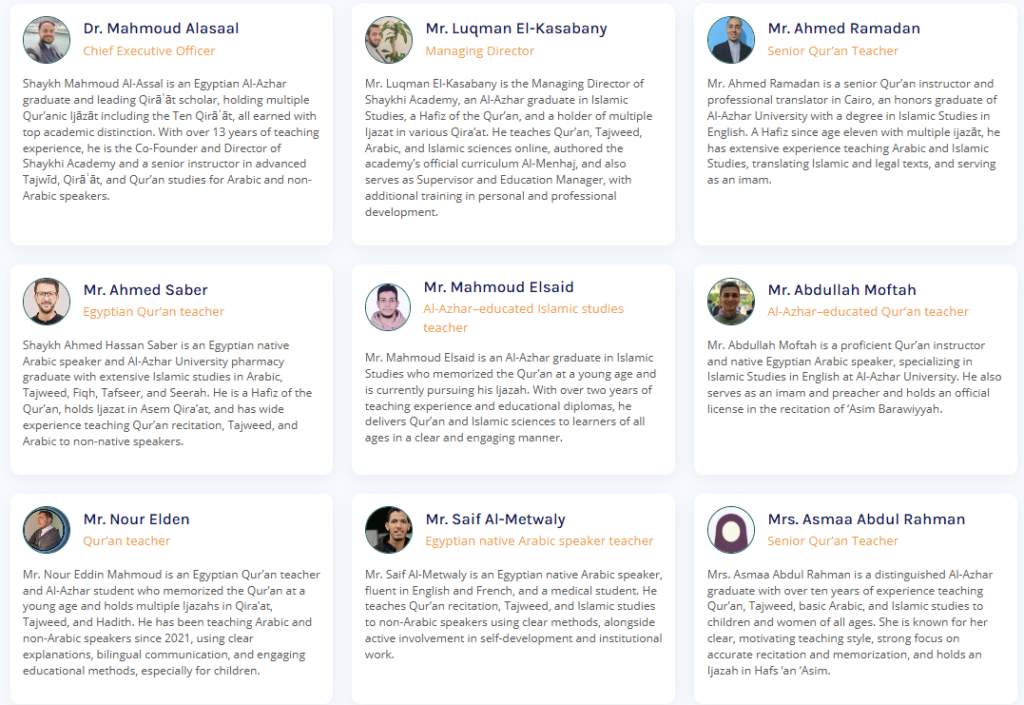
Weekly assessments with a qualified instructor ensure accuracy and Tajweed correctness. Certified Huffaz at Hifz Quran Online Academy provide regular evaluations through personalized one-on-one sessions.
Monthly progress reviews identify patterns: which Surahs memorize easier, what times work best, and how revision ratios affect retention.
Get a Free Trial with Certified Huffaz
Why a Quran Memorization Schedule Is Essential for Success in Hifz?
A Quran memorization schedule transforms aspirations into achievable daily actions. Without structured planning, students typically memorize inconsistently, leading to weak retention and eventual discouragement.
Structured schedules create accountability and measurable progress. They balance new memorization with essential revision, preventing the common problem of forgetting earlier portions while learning new ones.
Most students who complete Hifz successfully follow systematic schedules. Research on memory retention confirms that spaced repetition—built into proper schedules—dramatically improves long-term recall.
Hifz Quran Online Academy’s Quran Memorization Course helps students establish personalized schedules based on individual learning pace, with certified Huffaz providing guidance on balancing new lessons with effective revision systems.
Book a free trial to start your Hifz path today

Daily Quran Memorization Routine Structure
A structured daily routine maximizes memorization effectiveness and retention quality. Following the same pattern daily trains your brain for optimal learning.
Best time for new memorization: Early morning after Fajr prayer, when the mind is fresh and free from distractions. Prophet Muhammad ﷺ said:
اللَّهُمَّ بَارِكْ لأُمَّتِي فِي بُكُورِهَا
Allahumma barik li-ummati fi bukuriha
“O Allah, bless my nation in their early mornings.” (Sunan Abu Dawud)
Morning sessions demonstrate higher retention rates and require fewer repetitions for memorization.
1. Optimal Daily Schedule Structure
| Time Slot | Activity | Duration | Purpose |
| After Fajr | New Memorization | 45-60 min | Peak mental clarity for learning |
| Mid-Morning | Recent Revision (yesterday) | 20-30 min | Reinforce new material |
| After Dhuhr | Weekly Revision | 30-40 min | Consolidate recent portions |
| After Asr | Monthly Review | 30-40 min | Long-term retention |
| Before Sleep | Quick Review of New | 10-15 min | Transfer to long-term memory |
Samples Videos from Classes
2. Step-by-Step Daily Memorization Session
Begin with 10 minutes reviewing yesterday’s portion. This warm-up activates memory pathways and identifies weak spots needing attention.
Read new target verses 5-7 times while looking at the Mushaf. Focus on pronunciation, Tajweed rules, and understanding meanings.
Break target into smaller segments of 2-3 lines each. Memorize first segment by repeating 15-20 times without looking.
Connect segments together gradually. After memorizing each 2-3 line segment, combine it with previous segments until entire portion is memorized.
Recite complete new portion 10 times from memory without Mushaf. Correct any mistakes immediately by referring back to the text.
Review the new portion before sleeping. This final review transfers information deeper into long-term memory during sleep.
3. Repetition Requirements for Solid Memorization
| Memorization Stage | Repetitions Needed | Method |
| Initial Reading with Mushaf | 5-7 times | Read while looking, focus on Tajweed |
| First Segment (2-3 lines) | 15-20 times | Repeat without looking |
| Second Segment | 15-20 times | Repeat without looking |
| Connecting Segments | 10-15 times | Combine segments together |
| Complete New Portion | 10 times | Full recitation from memory |
| Same Evening Review | 5-7 times | Reinforce before sleep |
| Next Day Review | 3-5 times | Ensure retention |
Adjusting Your Quran Memorization Schedule When Needed
Flexibility prevents frustration when life circumstances change. Rigid schedules that don’t adapt lead to guilt and eventual abandonment.
If consistently struggling to meet daily targets, reduce the amount rather than skipping days entirely. Memorizing 3 lines daily consistently outperforms sporadic 10-line attempts.
During Ramadan, many students increase memorization intensity with additional Taraweeh motivation. Conversely, during exam periods or major life events, maintaining revision alone prevents regression.
Read Also: Quran Memorization Planner
Schedule Adjustments for Different Life Situations
| Situation | Schedule Modification | Focus Shift | Duration |
| Ramadan | Increase 50-100% | More new memorization | 30 days |
| Exam Period | Reduce to revision only | Maintain what’s memorized | 2-4 weeks |
| Illness | Light listening/reading | Connection without pressure | As needed |
| Pregnancy/New Baby | Minimal revision | Prevent forgetting | 3-6 months |
| Work Intensive Period | Reduce to 50% | Quality over quantity | Temporary |
| Travel | Audio revision | Listening-based review | During trip |
Pregnancy, illness, or family emergencies require schedule modifications without guilt. Maintaining minimal daily Quran connection, even just listening, preserves the habit.
Review and adjust your schedule quarterly. Analyze what’s working, what’s challenging, and what needs modification for sustained progress.
Read Also: Quran Memorization Timetable
Our Students Reviews
Memorize the Quran at Your Own Pace
Join our expert tutors and begin your Hifz journey with a personalized plan.
Start Your Free TrialRead Also: Quran Memorization Tracker
Start Your Quran Memorization Journey with Hifz Quran Online Academy
A well-structured Quran memorization schedule combined with expert guidance transforms Hifz from overwhelming to achievable. The right support system makes all the difference.
Hifz Quran Online Academy offers specialized memorization programs designed for non-Arabic speakers:
- Certified Huffaz with extensive experience teaching Western students
- Personalized one-on-one sessions tailored to your learning pace
- Flexible scheduling with 24/7 availability across all time zones
- Structured revision systems (Muraja’ah) proven for long-term retention
- Progress tracking and accountability with regular assessments
- Al-Menhaj Book for complete beginners needing reading foundations
Choose the program that fits your needs:
- Quran Memorization Course
- Quran Memorization and Hifz for Kids
- Online Quran Memorization Courses for Adults
- Quran Hifz for Ladies.
Book your free trial lesson today and begin your journey to Hifz with expert guidance every step of the way.

Conclusion
A successful Quran memorization journey depends less on speed and more on structure. Clear scheduling transforms memorization from emotional bursts into consistent practice, ensuring that new verses strengthen rather than weaken previously memorized portions.
Balancing new memorization with layered revision safeguards retention at every stage. Whether progressing quickly or slowly, disciplined review systems prevent gaps, reinforce fluency, and allow memorization to mature naturally over time.
Flexibility completes the system. Adjusting schedules during life changes, tracking progress honestly, and correcting common mistakes sustain long-term commitment, making Quran memorization a realistic, enduring pursuit rather than an overwhelming challenge.
Related Articles
Memorizing Quran







Leave a Reply